
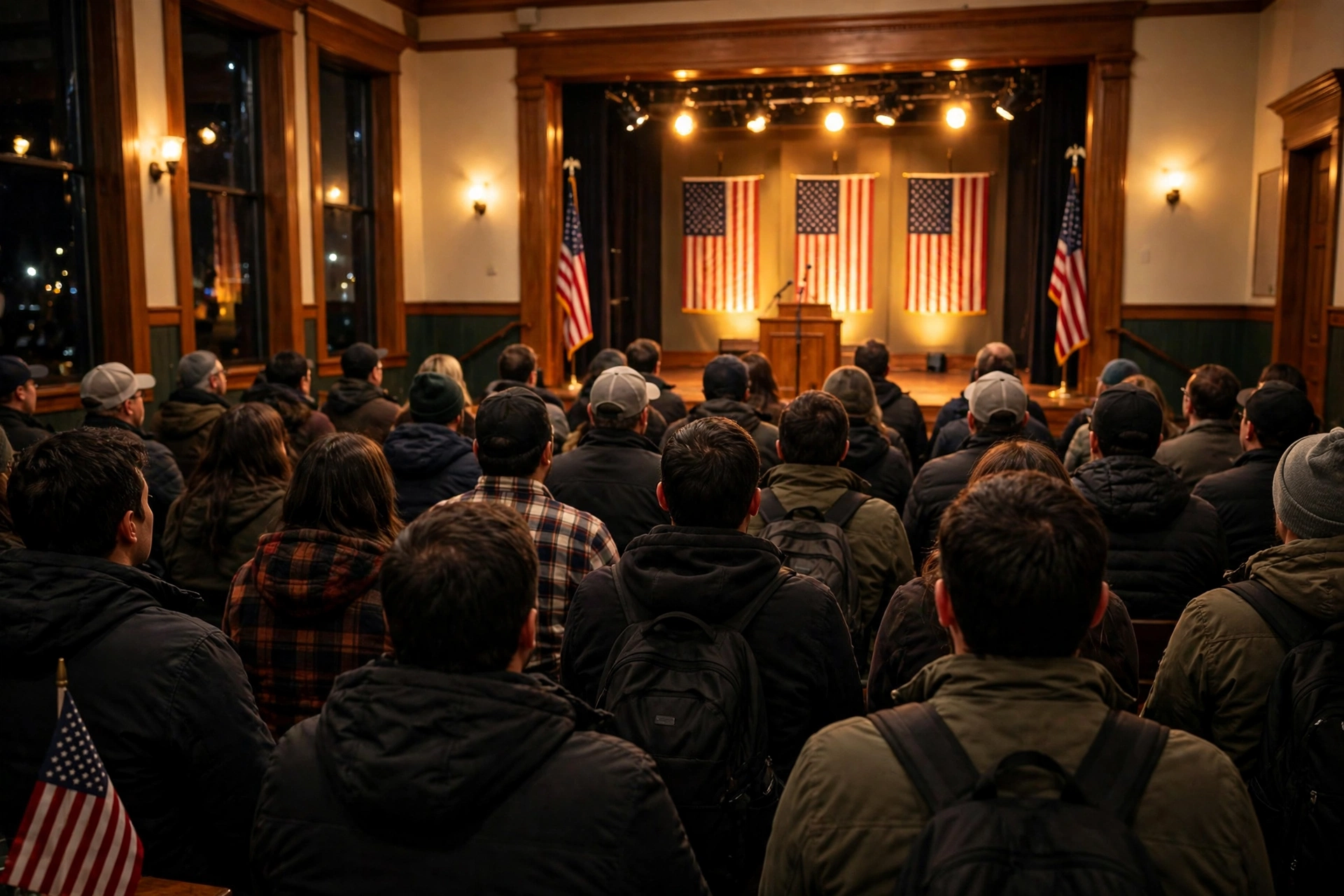
WASHINGTON.- President Donald Trump closed on Sunday his marathon campaign of rallies for Tuesday's midterm elections with two events in Iowa and Kansas, states that are traditionally Republican but are now in dispute, where he sought to mobilize his voters at the last hour.
Trump traveled first to Dubuque, Iowa, to boost four Republican candidates facing very tight races at a moment of growing discontent over the high cost of living, fueled in part by the war against Iran and rising fuel prices. Polls show a clear advantage for Trump's party in only one of Iowa's four contested House districts; the other three are tight, as is the governor's race, where Republican Zach Lahn trails slightly behind Democrat Rob Sand in the polls.
Nor is victory clear for Ashley Hinson, who seeks to defeat Democrat Josh Turek for the Senate seat at stake in Iowa. Hinson, who as a congresswoman represented the district that includes Dubuque, was a special focus of the Iowa event.
From there, the president traveled to Salina, Kansas, another town in the agricultural heartland of the United States. At stake there is fundamentally the Senate seat contested by Republican Senator Roger Marshall and the Democratic challenger, Methodist pastor Adam Hamilton. Kansas has not elected a Democratic senator since 1932, but this race has also closed unexpectedly.
The Salina event put an end to a marathon of 28 campaign rallies in the last 31 days, undertaken by the president with the aim of preserving control of Congress after November 3 and avoiding being weakened in the remaining two years of his term. The rally also had a farewell air: it is expected to be the last in which Trump, who legally cannot run for reelection, has his own political future directly at stake.
Trump had initially announced that he was canceling these rallies, but then reversed course and decided to travel, underscoring the importance of his visit to these territories. The elections will renew all 435 seats in the House of Representatives and 35 of the 100 in the Senate, and more than 52 million Americans had already voted early, according to the Election Lab at the University of Florida.
Sources: EFE via ABC, El Heraldo and La Tribuna, November 1, 2026; TN, November 1, 2026; Diario.mx, November 1, 2026.