
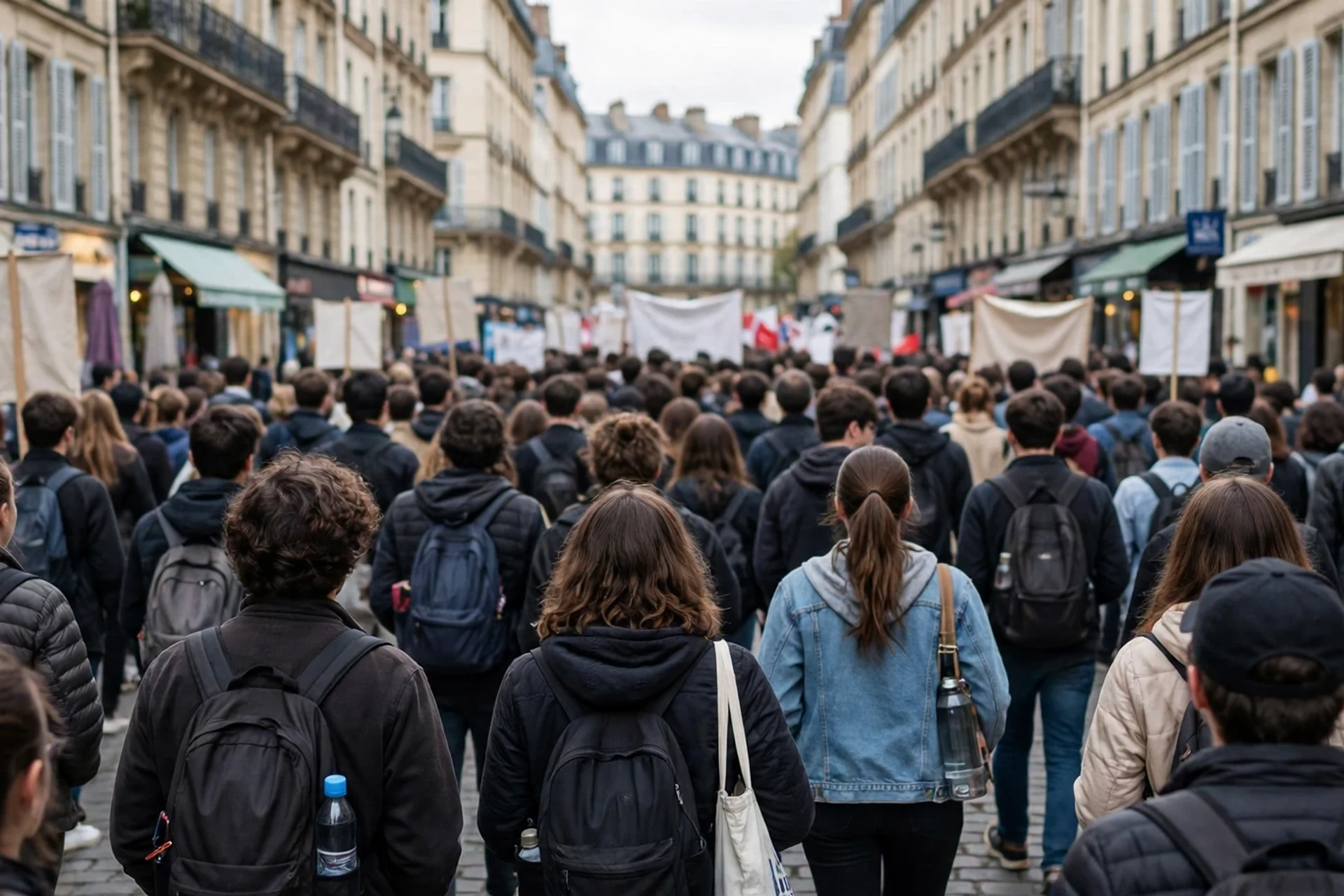
PARIS, FRANCE.- Students blockaded dozens of high schools across France on Tuesday, November 3, 2026, as a youth-led revolt against the cost of living, crumbling schools and unaffordable housing spread across Europe, reaching Germany, Spain, Portugal, Italy and Belgium. Authorities said 48 of France's 3,700 high schools were blocked, including in Paris, Rennes, Toulouse and Lyon, and the Paris police prefecture estimated between 15,000 and 30,000 demonstrators would take to the streets of the capital after student organizations called a new "Black Tuesday" of mobilization, with another day of blockades planned for Thursday alongside a nationwide strike.
The spark was lit in mid-September, when French high school students took to the streets to demand better facilities and an end to an opaque university admissions system. After weeks of rallies, the protests drew at least 550,000 people on October 17, and on Saturday, October 31, the French government estimated 320,000 people demonstrated nationally, 70,000 of them in Paris, in the third consecutive weekend of mass marches. Authorities deployed about 70,000 police and gendarmes, made more than 770 arrests over the weekend, and reported 14 officers injured; after protesters allegedly hurled incendiary devices at police on Saturday, prosecutors opened an attempted murder investigation, and Interior Minister Laurent Nuñez backed the move, saying anyone who throws an incendiary at an officer must face the full weight of the law.
Frankfurt: more than 100 police injured, 54 arrested, most aged 13 to 29
In Germany, previously relatively calm, the weekend brought a major incident in Frankfurt, where looters and rioters damaged stores and injured more than 100 police officers. Roman Poseck, interior minister of the state of Hesse, said more than 1,300 police officers had struggled to maintain order and arrested 54 people aged between 13 and 29. German youth protests took place in more than 30 cities under the "Gen Z regelt" banner, focused on education, healthcare, climate action and living affordability, with participants reporting structural damage to schools, teacher shortages and inadequate public services. In Spain, Portugal and Greece, housing is "a central element" of the anger, researchers say, tied directly to purchasing power and an ever more unequal distribution of wealth — and the French word "blocus" (blockade) has become a popular hashtag among students in Belgium, Italy and Spain.
United Nations human rights experts have condemned what they called the "excessive use of force" by French authorities against the student protests, warning that mass arrests, detentions and serious injuries were deterring demonstrators from exercising their fundamental rights. With key elections coming over the next year in Spain, France, Italy and Greece, the movement has struck a nerve far beyond school gates: a generation that says it cannot afford housing, cannot trust traditional institutions, and is no longer willing to wait its turn.
Read more on The Wire Post: France Students Defy Banned Paris March, Police Clear Puerta del Sol Camp at Dawn in Madrid and Óscar Puente Defends His Management in Congress Over Urda.
Sources: AFP via Malay Mail, Reuters via China Daily, BFMTV, Paris police prefecture, Hesse Interior Ministry, November 3, 2026.