
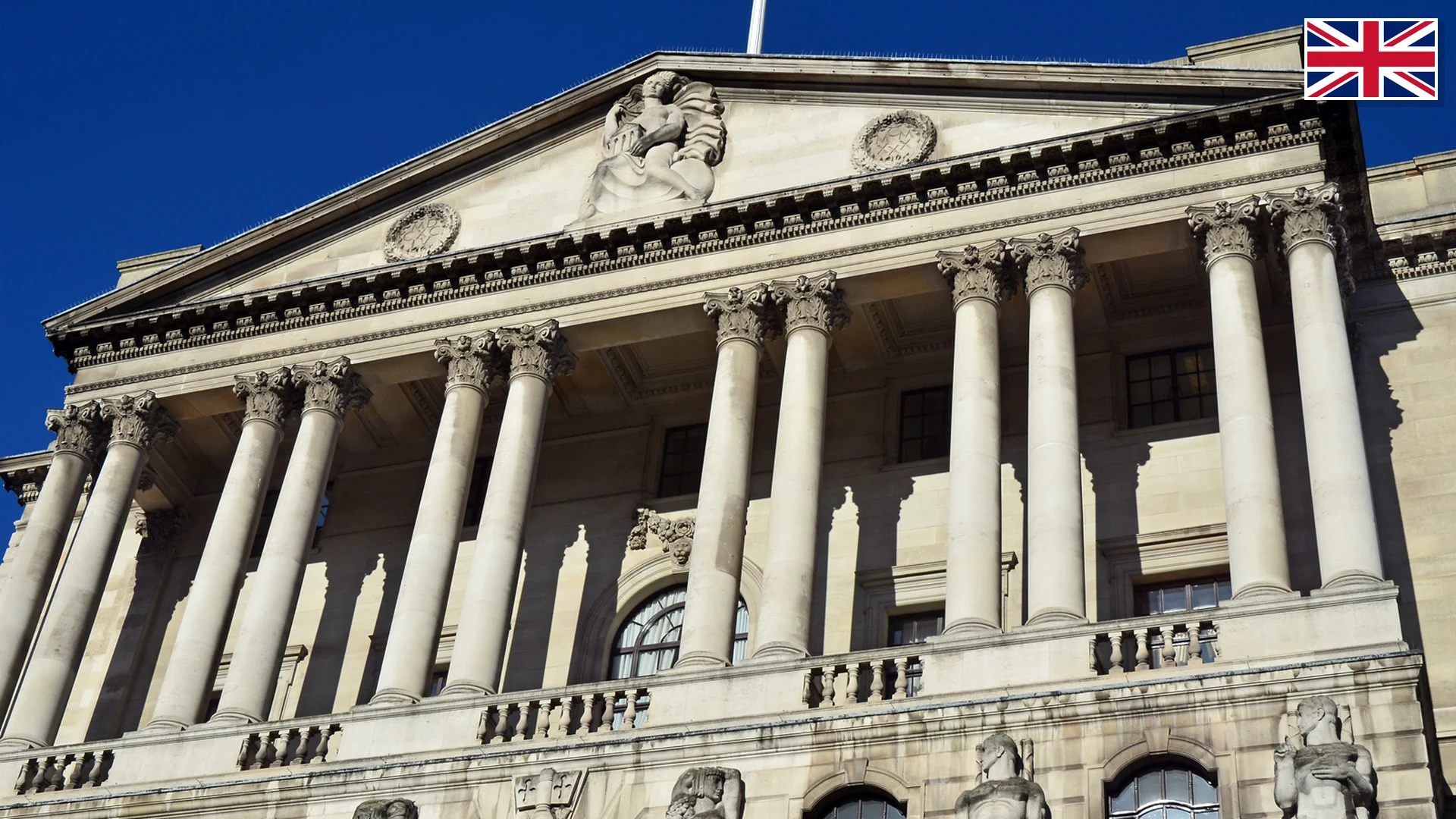
LONDON.- The Bank of England raised its key interest rate to 4% on Thursday, November 5, 2026, the first increase in borrowing costs in more than three years, as the war in the Middle East pushes energy prices higher and inflation toward 5%. The Monetary Policy Committee voted 8-1 to lift Bank Rate by a quarter of a percentage point from 3.75%, the Bank announced at noon in London, and Reuters reported.
The lone dissenter wanted a bigger move. Catherine Mann, an external member of the committee, voted to raise the rate by half a point, to 4.25%, arguing that an activist approach was needed to stop persistent inflation from becoming embedded. The other eight members — Governor Andrew Bailey, Sarah Breeden, Swati Dhingra, Megan Greene, Clare Lombardelli, Huw Pill, Dave Ramsden and Alan Taylor — backed the quarter-point rise, according to the minutes.
Why now: an energy shock in its ninth month
The conflict in the Middle East is now in its ninth month, and global energy prices have kept rising from an already elevated level, the Bank said in its summary. UK consumer price inflation reached 3.5% in September, up from 3.1% in August, and the Bank now expects it to rise to around 5% by the middle of next year.
The numbers behind the decision are stark. Brent crude averaged $108 a barrel over the 15 working days to October 27 — 38% higher than when the Bank published its July report — while UK natural gas averaged 216 pence per therm, 81% higher, the minutes show. Direct energy effects already contributed around one percentage point to September's 3.5% inflation reading, most of it from fuel prices.
Bank staff now project inflation of around 4.5% in the first quarter of 2027 and around 5% in the second quarter. In the Bank's central forecast, inflation does not return to its 2% target until the third quarter of 2028 — six months later than it predicted in July. And in a worse scenario, with oil peaking at around $130 a barrel against roughly $100 now, inflation would hit 6.2% in the third quarter of 2027, Reuters reported.
Bailey: not the first of a long sequence — but probably not the last
Governor Andrew Bailey was careful to say the rise does not commit the Bank to a run of increases — but he did not rule more out either. "Today's increase shouldn't be seen as the first in an inevitable long sequence of hikes. But unless the conflict in the Middle East is resolved, neither does it seem likely to be the last increase," Bailey said, Reuters reported.
"Without news which softens the risks to inflationary pressures, I can see the argument for a further increase in rates," he added in the minutes. Deputy Governor Clare Lombardelli said a further rise was likely to be needed in the near term, while Chief Economist Huw Pill said the quarter-point move "represents a significant step towards attaining the monetary policy stance needed to address current threats to price stability," Reuters reported.
Not everyone on the committee is convinced more tightening is coming. Swati Dhingra and Alan Taylor, who had previously been reluctant to raise rates, said they would need stronger evidence that higher energy costs are feeding into wages and other prices before backing further moves. "Further tightening depends on continued energy price pressures as well as unfolding evidence of propagation into domestic wages," Taylor said, according to The Wall Street Journal. Mann, by contrast, warned of "non-linear inflation risks" now that inflation has passed 3.5%, which she viewed as a potential trigger for a loss of confidence in the central bank.
The split matters because markets are betting on more. Financial markets have priced in three quarter-point rises in 2027, Reuters reported, and ahead of the meeting investors were anticipating a rate of 5% by the end of next year, the Journal reported. Bank officials signalled they expect less: one more increase, to 4.25%, is likely.
What it costs households
The decision lands directly on borrowers. About 510,000 households have tracker mortgages that move in step with Bank Rate, and a quarter-point rise adds roughly £31 a month to a typical tracker repayment, according to calculations by the banking trade body UK Finance, the BBC reported. Another 470,000 borrowers on standard variable rates face about £14 a month more, if their lenders pass the rise on. The 87% of mortgage customers on fixed-rate deals see no immediate change — but the cost is already in the prices they are offered: the average two-year fixed rate stood at 5.96% and the average five-year rate at 5.99% as of November 4, according to Moneyfacts, and about 800,000 fixed deals priced at 3% or below expire each year on average until the end of 2027.
Borrowing costs had already been climbing before Thursday. Benchmark two-year mortgage rates have risen by nearly 50 basis points since the start of September, and mortgage rates overall are up a full percentage point since the war began, the Bank's minutes and the Journal reported. After inflation and taxes, British households' income from work is set to fall both this year and next, the Bank said — a blow for Prime Minister Andy Burnham, who has sought to ease cost-of-living pressures.
The Bank also raised its growth forecasts, to 1.6% this year and 1.3% next — stronger than the Office for Budget Responsibility predicted last week — helped by spending on artificial intelligence and a small, temporary boost from Chancellor John Healey's Budget on October 28. That Budget is expected to lower inflation by a quarter of a percentage point at its peak, but to push it up later as temporary cost-of-living help expires, Reuters reported.
A sharp turn from the start of the year
Thursday's move ends a long stretch of stillness. The Bank held its rate at 3.75% at its last six meetings, and the last change before today was a cut to that level in December 2025. At the start of the year, two cuts in 2026 had been widely expected. Instead, the energy shock forced the first increase since August 2023, when the rate peaked at 5.25%.
The next decision comes on December 17. Whether the Bank moves again will turn on the same question that divided the committee on Thursday: whether the energy shock stays contained in fuel and heating bills, or starts showing up in pay deals and prices across the economy. The Bank warned that wage settlements early in 2027 will be a key test — and that a credible and sustained de-escalation in the Middle East is the one development that could bring energy prices, and inflation, back down.
What is still to be confirmed
The Bank has not committed to a path: it stressed that monetary policy "is not on a pre-set path" and will be judged meeting by meeting. What happens next depends on whether the Middle East conflict eases, on the wage settlements due early in 2027, and on whether the December 17 meeting brings a second consecutive rise. This article will be updated if the Bank signals its next move or if markets and lenders react with new mortgage pricing.
Read more on The Wire Post: Trump Admits Iran War Cost Republicans the Midterms: "Largely True," but Says He Would Do It Again, JD Vance Blames Iran War for Republican Midterm Defeat and France's Economy Shrinks as Inflation Rises in October.
Sources: Bank of England, November 2026 Monetary Policy Summary and Minutes, November 5, 2026; Reuters, November 5, 2026; The Wall Street Journal, November 5, 2026; BBC, November 5, 2026. Cover photo: The Bank of England on Threadneedle Street, London (CC BY-SA 2.0, via Wikimedia Commons), with a small flag of the United Kingdom added in the top-right corner.