
WASHINGTON.- Democrats won control of both chambers of the United States Congress in Tuesday's midterm elections, Reuters reported, seizing the Senate and the House of Representatives from Republicans in a sweeping result that will leave President Donald Trump facing a divided government for the final two years of his term. The Associated Press called the House for Democrats after the party passed the 218 seats needed for a majority, with 222 seats called for Democrats and 41 more still leading at the time of the AP's published tally, against 138 called for Republicans. The calls are projections by news decision desks, not certified results, and the final seat counts may still change as outstanding races are resolved.
The Senate call came first. Democrats flipped Republican-held seats in North Carolina, South Carolina, Ohio, Texas, Kansas and Iowa, Nikkei Asia's live coverage of the AP calls reported, clearing the 51-seat threshold in the 100-seat chamber. The AP called the House for Democrats later in the night, at 1:35 a.m. Washington time, according to Nikkei Asia — a far faster House call than in 2024 and 2022, when the AP did not call control of the chamber until eight days after Election Day.
A wave that reached Republican strongholds
The scale of the result is what sets it apart. Reuters reported that Republicans lost ground in all but a handful of the approximately 1,700 counties where most votes had been counted on Tuesday night, according to tallies compiled by Reuters and USA TODAY, and that Democrats won all 20 of the House contests considered especially competitive that had been decided. An unprecedented Republican effort to redraw several House districts to make them more favorable largely failed, Reuters added, with Democrats holding on to most of the targeted seats.
The Senate flips tell the story state by state. Kansas elected its first Democratic senator since the Great Depression nearly a century ago, Reuters reported, with Democrat Adam Hamilton leading incumbent Republican Senator Roger Marshall by 13 points in Seward County, home to one of America's biggest beef processing plants, two years after Trump won that county by 39 points. In South Carolina, a state Trump carried by nearly 18 points in 2024, Democrats turned aside his hand-picked Senate candidate, Reuters reported: Democrat Annie Andrews was projected to defeat Darline Graham, whose brother, Senator Lindsey Graham, died suddenly earlier this year. In Texas, Democrat James Talarico was projected to defeat Republican Ken Paxton, the state's scandal-ridden attorney general whom Trump had backed over incumbent Senator John Cornyn. The other flipped seats went to Roy Cooper in North Carolina, Josh Turek in Iowa, Sherrod Brown in Ohio and Troy Jackson in Maine, according to the AP calls summarized by The Financial Channel.
In Maine, Republican incumbent Susan Collins saw her 30-year Senate career end on Tuesday despite emphasizing her willingness to break with the president during the campaign, Reuters reported. Competitive Senate races in Mississippi, Michigan and Alaska had yet to be called early on Wednesday, Reuters added.
What voters said drove the result
Democrats campaigned on corruption and affordability, blaming Trump's tariff policy and the war with Iran for driving up costs, while Republicans attacked Democrats over culture-war issues such as transgender rights, Reuters reported. In poll after poll, voters said they were far more concerned with pocketbook issues, Reuters noted. According to exit polls conducted by SSRS on behalf of a consortium of US media outlets including major television networks and the Associated Press, half of voters nationwide said they saw the 2026 midterm elections as an opportunity to rebuke the president, three-quarters said they are "angry" or "dissatisfied" with the way the country is headed, and 70 percent said they want Congress to provide more checks and balances on the president.
"There is now a generational remake of the Senate map that is going to change America," said Chuck Schumer, the party's Senate minority leader, in remarks reported by Reuters. "Americans voted for change, and now Democrats must deliver."
Trump accepts the outcome, and what happens next
Despite worries from Democrats that Trump might seek to overturn the election results, as he did in 2020, the president accepted the outcome, congratulating Democrats in an interview with Fox News, Reuters reported. He also said he would work with Democrats on issues such as immigration, though he threatened to veto any "insane" bills they passed. As it grew clear on Tuesday night that Republicans were in danger of losing their congressional majorities, Trump wrote on social media: "I wasn't on the Ballot and if I was, we would have won IN A LANDSLIDE! Thank you for your attention to this matter."
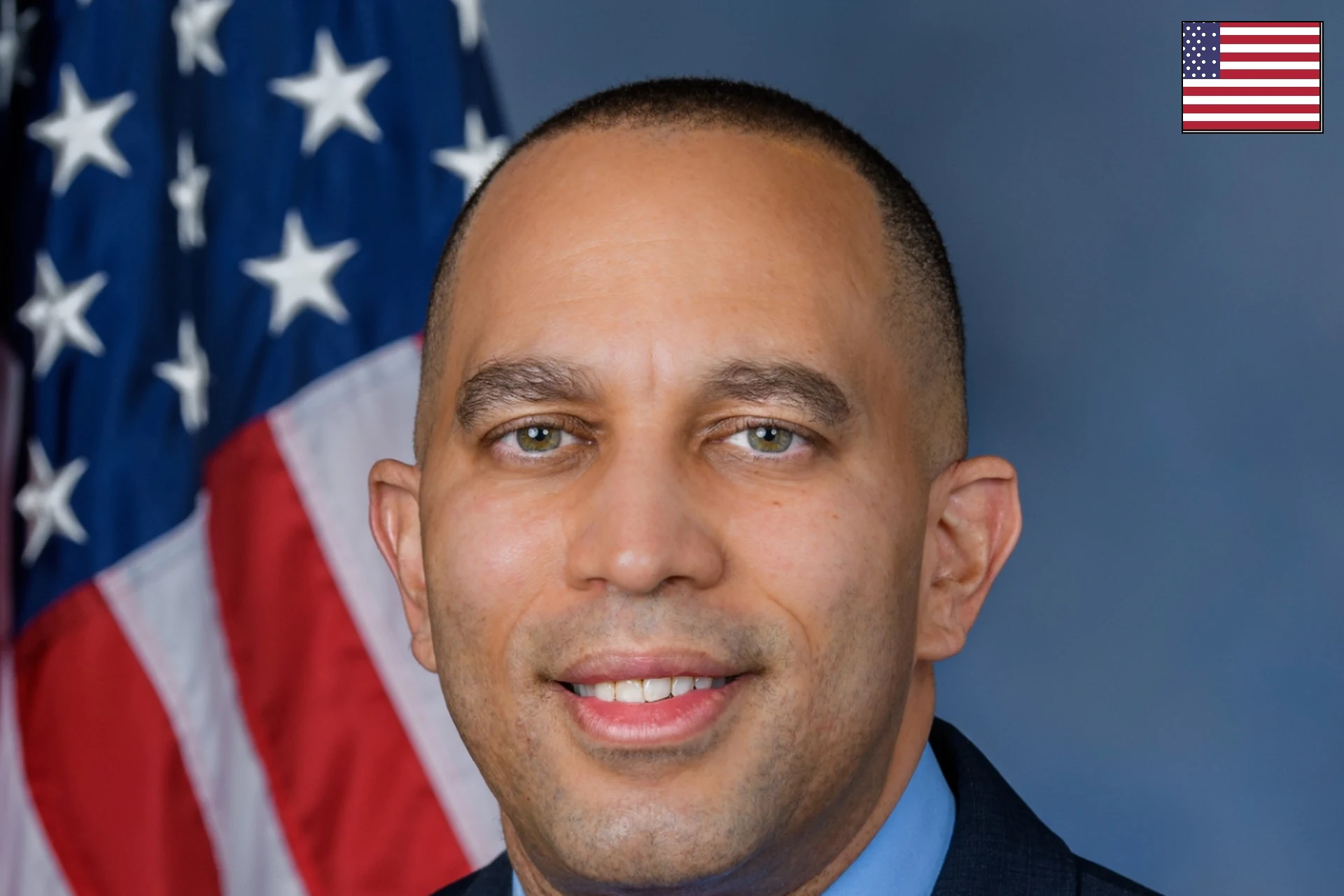
The transfer of power is not immediate. The current Republican-controlled Congress remains in place until the newly elected Congress begins on January 3, 2027. Once seated, Democrats are expected to use their power to investigate Trump's administration, family and allies and to demand concessions on major legislation, Reuters reported, and the Democratic Senate can block Trump's nominees, including any US Supreme Court justices should a vacancy arise. House Democratic leader Hakeem Jeffries is positioned to become the first Black speaker of the House, but his election to that role is not automatic: the full House votes on the speaker when the new Congress convenes.
Both chambers changing party control in the same midterm is unusual. AP's historical review found it had happened only three times since World War II — in 1946, 1994 and 2006 — before the 2026 result.
The night also produced several historic firsts beyond Congress itself. In Georgia, Democrat Keisha Lance Bottoms became the first Black woman elected governor of any US state, while Byron Donalds won Florida's gubernatorial race to become the first Black Republican governor in the US; Democrat Gina Hinojosa will become the first Latina governor in Texas, and Democrat Xavier Becerra will be California's first Latino governor, Reuters reported.
What remains to be confirmed is the final certified seat count in both chambers, the results of the still-uncalled Senate races in Mississippi, Michigan and Alaska, and the speaker vote in January. The projections themselves, however, already settle the central question of the night: after two years in which the Republican-controlled Congress rarely exercised its power to rein in Trump, Washington now heads into divided government.
Read more on The Wire Post: Keisha Lance Bottoms Wins Georgia Governor's Race, Becoming First Black Woman Elected Governor of a US State, Polls Open Across America as Donald Trump Faces the 2026 Midterm Verdict and Donald Trump Faces Verdict as Americans Vote in the 2026 Midterms.
Sources: Reuters, November 4, 2026; Associated Press election results, November 3-4, 2026; Nikkei Asia live coverage of AP calls, November 4, 2026; The Financial Channel summary of AP calls, November 4, 2026. Cover photo: official portrait of House Democratic Leader Hakeem Jeffries, 2021, U.S. House of Representatives (public domain, via Wikimedia Commons), with a small U.S. flag in the corner.