
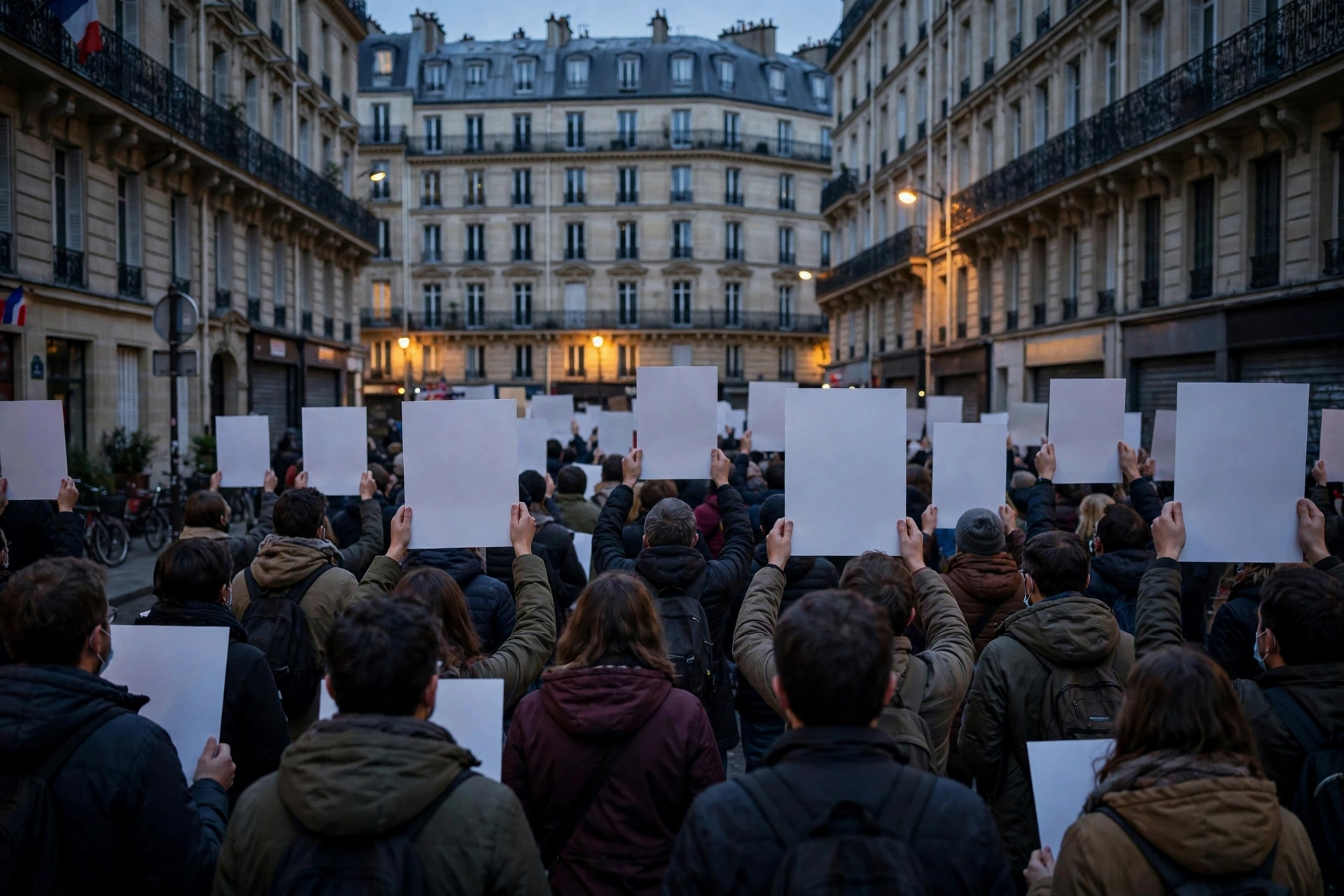
PARIS.- France marched through its third straight Saturday of anger on October 31, and what comes next is shaping up as the hardest week yet for President Emmanuel Macron: school and university blockades on Tuesday, a nationwide general strike on Thursday, November 5, and yellow-vest mobilizations on November 6 and 7.
Saturday's turnout confirmed the movement is not fading even as it shrinks. The Interior Ministry counted 320,000 demonstrators nationwide, including 70,000 in Paris, while unions estimated closer to 500,000. Police put the final arrest tally for the day at 565. The marches unfolded under a heavy security deployment: 70,000 police and gendarmes, more than 40 metro stations closed in Paris, and the historic Bastille-Nation route banned, with protesters pushed to the city's eastern edge between Porte de Charenton and Porte de Bagnolet.
The week ahead is already mapped out. After the school holidays end, students plan to block high schools and universities starting Tuesday, November 3. On Thursday, November 5, five unions — CFDT, CGT, FO, UNSA and FSU — have called a national strike day over wages and public services, joined by four SNCF rail unions. The ecologist leader Marine Tondelier summed up the mood by calling Saturday merely "the last warm-up" before the strike.
The government's package announced Monday — 4,000 million euros for high schools, 15,000 new university places, replacing the Parcoursup admissions platform and capping seconde classes at 28 pupils — has been dismissed by student organizations as insufficient, and the unions say the core demands on purchasing power, salaries, pensions and public services remain unanswered.
Polls show a country torn. An Odoxa survey conducted October 21-22 found 68% of French people consider the student mobilization justified, but 63% want it to end after this weekend. A Cluster17 poll for L'Opinion put support for the movement at 53%, while 59% want it to finish soon — up six points since the unrest began. The same Odoxa barometer put Macron's approval at just 16%, his lowest level in that survey.
The human-rights angle is also escalating. The Human Rights League (LDH) has denounced what it calls "great violence" by police against students since September and says nearly 8,000 young people — more than 80% of them minors — have been detained since the movement began. The Magistrates' Union and the Association for the Defense of Constitutional Freedoms have challenged before the Council of State whether the president can ban non-union demonstrations without an explicit legal framework.
What began in mid-September in classrooms — protests over teacher shortages, overcrowded classes and deteriorating schools — has grown into the biggest wave of social discontent since the yellow vests, now fused with anger over the cost of living and fuel prices. Saturday was the third Saturday in a row; the coming week will show whether the strike can carry that energy from the streets into the workplaces.
Sources: La Nación (Argentina), October 31, 2026; Que Pasa Salta, October 31, 2026; El Ciudadano, October 31, 2026; La Izquierda Diario, October 31, 2026.