
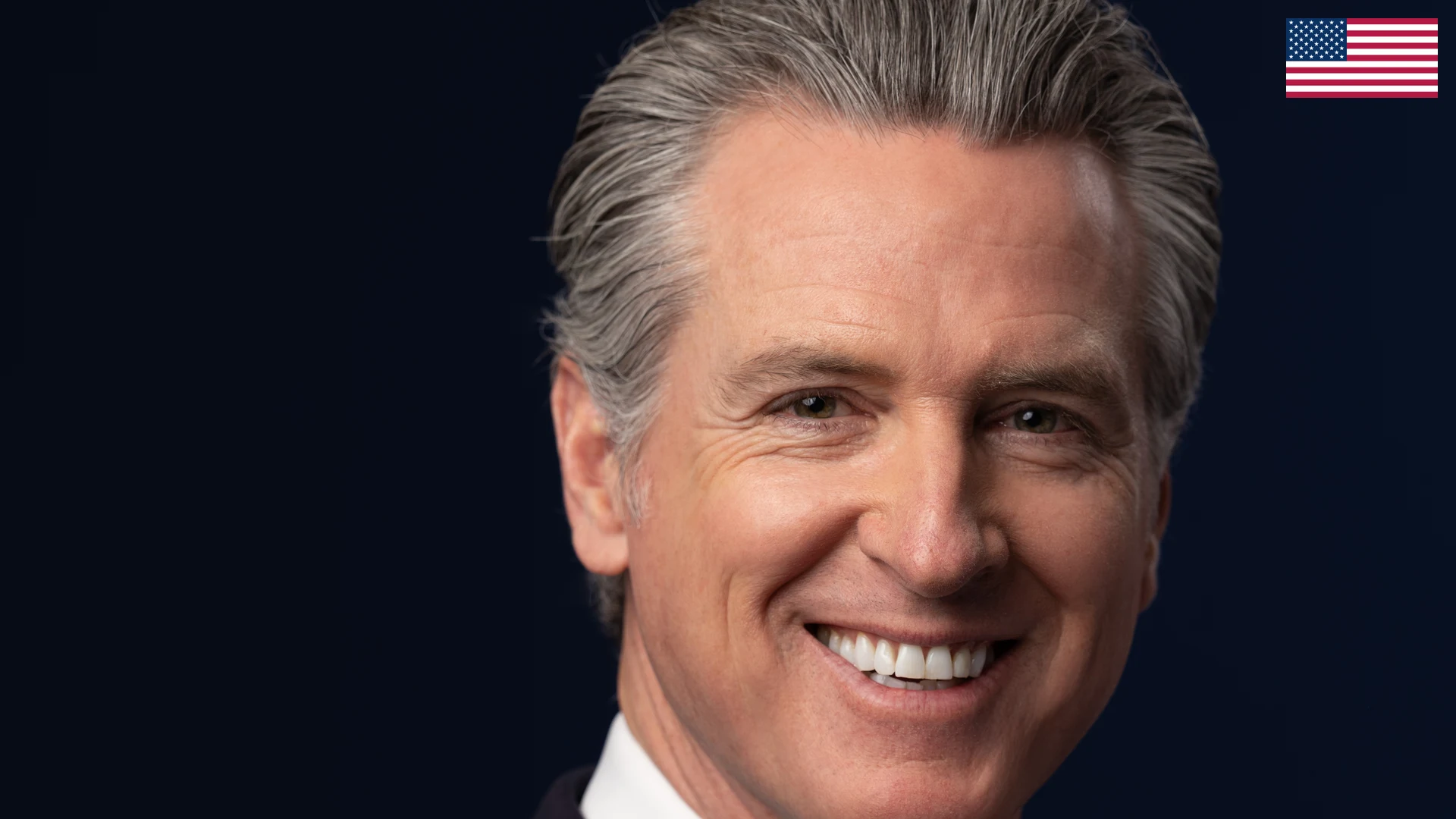
SACRAMENTO, California.- California Governor Gavin Newsom announced Thursday he will commute the death sentences of all 548 people on the state's death row to life in prison without the possibility of parole, Reuters reported. It is the largest mass commutation in American history, according to the Death Penalty Information Center, and it empties the largest death row in the United States — and in the Western Hemisphere.
Newsom announced the decision in a three-page open letter addressed to "all Californians," CNN reported. "My decision today comes after nearly three decades of openly opposing state-sanctioned executions as an elected official," he wrote, adding that he believes "state-sanctioned killing is incompatible with California's values."
The move does not repeal the death penalty. Prosecutors can still seek death sentences in new cases, and the punishment remains on the books after California voters twice chose to keep it, in 2012 and 2016. What changes is the fate of every person currently condemned: instead of execution, they will spend the rest of their lives in prison.
Not automatic for everyone
Taking hundreds of people off death row will not happen all at once. The grants take effect immediately for about a third of the 548, while the other 382 cases must be reviewed and approved by the California Supreme Court, according to the governor's office, because the state constitution requires court approval before a governor can grant clemency to someone convicted of more than one felony. No timeline for that review has been announced.
Newsom imposed a moratorium on executions shortly after taking office in 2019, and the state has not carried out an execution in about 20 years. California has executed 13 people since 1976, according to the Death Penalty Information Center. Only five people received death sentences in 2025, down from 42 in 1999, and as of April of this year, 68% of the people under a death sentence in California were defendants of color, the center said.
The 548 include some of the state's most notorious killers: serial killer Randy Kraft, known as the "Southern California Strangler"; Charles Ng, convicted of killing 11 people in California in the 1980s; and Richard Allen Davis, who kidnapped and killed 12-year-old Polly Klaas in 1993.
Praise, and anger from victims' groups
The American Civil Liberties Union praised the decision as "a historic step towards ending the death penalty in California and across the country." "These commutations reflect what justice demands: an end to a racist, error-prone, and inhumane punishment that has burdened California for far too long," said Anthony D. Romero, the ACLU's executive director.
Other groups, including the Criminal Justice Legal Foundation, Crime Survivors and the California District Attorneys Association, opposed the move, saying it would harm victims' families and undermine the will of California voters and the court system. "Our hearts break for every family feeling revictimized by this decision. You deserve to be heard, respected, and your loved ones will always be remembered," Crime Survivors said in a statement.
Los Angeles County District Attorney Nathan J. Hochman said that while commuting death sentences is within Newsom's power, abolishing the death penalty is still in the voters' hands. "Californians have been asked on two separate ballot initiatives to abolish the death penalty and both times they have chosen to keep it for the most serious crimes," Hochman said. "Until the law is changed, my office will continue to evaluate every death penalty-eligible case with the rigor, care and restraint these decisions demand."
Other prosecutors backed the governor. "By commuting death sentences, Governor Newsom will save California taxpayers hundreds of millions of dollars over the long term, and enable the state to continue its long-term investment into policies proven to improve public safety," Contra Costa District Attorney Diana Becton said.
Some victims' families supported the decision. "I used to think the man who killed my sister deserved execution," Jess Nichol, the sister of Polly Klaas, said in a statement. "But over time I've realized that whether he's executed has absolutely nothing to do with my recovery or with real public safety."
A divided country on the same day
Newsom's announcement came on the same day three other states carried out executions. Florida administered its 19th execution of the year, a record-tying total, in an unusual day in which Florida, Alabama and Indiana all put prisoners to death, CNN reported. Alabama Governor Kay Ivey used the moment to take a jab at California. "California may let their criminals escape justice, but not Alabama. Here, we enforce the law and always will," Ivey said.
The death penalty has faced renewed scrutiny since Tennessee's failed execution of Christa Pike in late September, when she survived two doses of pentobarbital. Tennessee has since paused its remaining executions, while requests to stop executions elsewhere have been denied in court.
Newsom is not the first governor to empty a death row. In recent years, governors in North Carolina, Oregon and Colorado commuted death sentences for some or all inmates on death row. Most recently, Alabama's Ivey granted clemency in March to a man who had spent three decades on death row. But at 548 people, California's commutation is by far the largest, and it would cut the number of people sentenced to death nationwide by nearly a third.
The announcement comes as Newsom, a Democrat who is expected to seek his party's presidential nomination in 2028, nears the end of his second and final four-year term as governor, with his term ending in January.
What remains to be seen is whether the California Supreme Court approves all 382 cases that require its review, how quickly the commutations take effect for those prisoners, and how the decision plays in the national debate over capital punishment — a debate in which California has now moved decisively in one direction on the same day other states moved in the other.
Related coverage: Nithya Raman Defeats Karen Bass to Become Los Angeles' First Asian American Mayor · Donald Trump Loses His Supreme Court Winning Streak on Elections as Justices Reject California Ballot Case in Just Six Hours · King Tides and a Super El Niño Push California's Coast to the Brink as Flood Warnings Take Effect
Sources: Reuters, November 5, 2026; CNN, November 5, 2026; Associated Press via PBS NewsHour, November 5, 2026; Death Penalty Information Center. All times are local time in California. Cover photo: Official portrait of Governor Gavin Newsom, March 2026 (public domain, Charles Ommanney, Office of the Governor of California, via Wikimedia Commons), cropped to 1920x1080 with a small flag of the United States added in the top-right corner.