
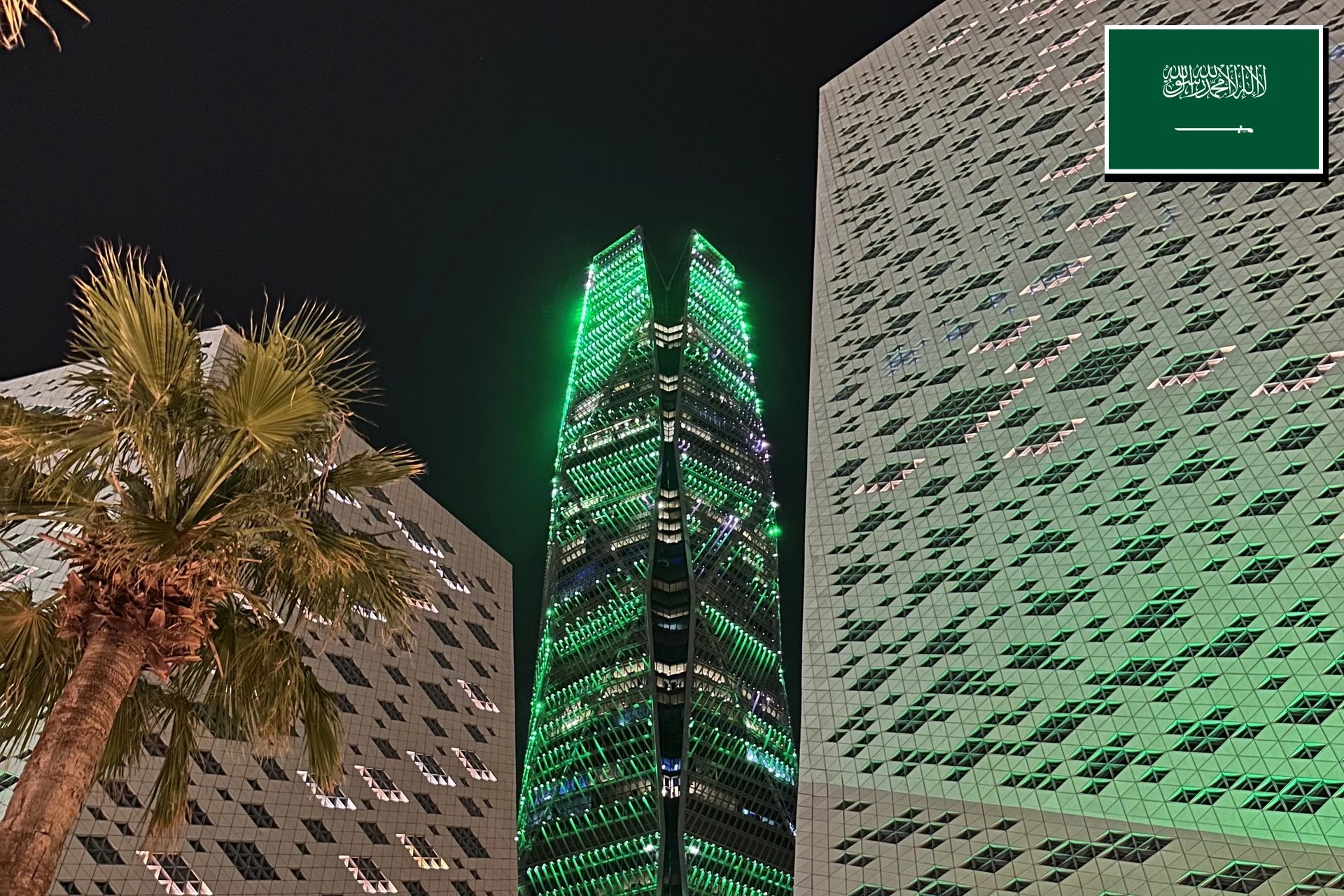
The Saudi-led coalition said early on Saturday it had intercepted and destroyed three Houthi ballistic missiles fired towards Riyadh, marking the second Houthi attack on the Saudi capital in three days and the sharpest escalation of the Yemen war since fighting reignited in July. The missiles came hours after the coalition said it had carried out a "special operation" against the Houthi-held Red Sea port of Hodeida and military targets in Sanaa, Al Jazeera reported.
An AFP journalist in Riyadh reported hearing two explosions shortly after Saudi civil defence issued an alert warning the city was "under a hostile aerial threat". The alert was later lifted and civil defence declared the danger had passed. Coalition spokesman Maj. Gen. Turki al-Malki announced the interceptions on X shortly after 2 a.m., following a civil defence alert issued at 1:53 a.m., Arab News reported. The Houthis said on X that they were striking targets across Saudi Arabia, including in Riyadh.
It was the third night in a row that Saudi Arabia issued and quickly lifted emergency alerts for Riyadh. The civil defence agency had issued eight public emergency alerts during a 24-hour period starting at 7:30 a.m. Saudi time (04:30 GMT) on Friday, according to Al Jazeera. Hours after the Riyadh interceptions, the coalition said it had destroyed another Houthi drone fired towards the kingdom's south, without saying which province was targeted.
Thursday: the tower in the financial district
The sequence began on Thursday, 19 November, when a Houthi attack damaged several floors of a tower in Riyadh's King Abdullah Financial District. Witnesses told AFP that the damaged building was the Public Investment Fund Tower, the headquarters of Saudi Arabia's sovereign wealth fund and the capital's tallest skyscraper at 385 metres, Dawn reported. The Houthis later told people to avoid the financial district, which they called a "military target", and said its offices had been evacuated weeks ago.
Pakistan condemned the attack on the financial district on Saturday. "Targeting civilian infrastructure endangers lives and threatens regional peace and security," Foreign Minister Mohammad Ishaq Dar said, calling for the attacks to stop immediately and saying Pakistan "stands firmly" with Saudi Arabia, Al Jazeera reported. Prime Minister Shehbaz Sharif said "such acts of reckless aggression, targeting civilian infrastructure and economic facilities, are totally unacceptable and threaten regional peace and stability," Tribune reported.
Friday: the coalition's "special operation"
On Friday, the Saudi-led coalition said it had struck Hodeida port and military targets in the capital, Sanaa. Coalition spokesman Turki al-Malki said its forces had "targeted operational capabilities at Hodeida port that were used in smuggling operations and the transport of weapons and ballistic missiles", the AFP news agency reported, via Al Jazeera. The coalition said it destroyed one of the Houthis' main supply depots in Sanaa, along with several other military targets, and that the operation aimed to neutralise sites used to target civilians in Yemen and Saudi Arabia.
Yemen's internationally recognised government defended the strikes, accusing the Houthis of using Hodeida's facilities to receive smuggled Iranian weapons and conduct military operations. Early on Friday, the Houthis accused the Saudis of striking a civilian boat, killing 19 people, The Hindu reported.
The Houthis answered the Hodeida operation with threats: to hit Jeddah and other Saudi Red Sea ports, to strike Riyadh's financial district again and a power station in Al-Shuqaiq, in the southwest, and a warning to airlines that Saudi airspace was "unsafe". Their Humanitarian Operations Coordination Centre sent emails to shipping companies and other bodies using Jeddah port, warning them to evacuate.
Saturday: missiles, claims and counter-claims
Two ballistic missiles were also intercepted over the Jizan region near the Yemen border, the coalition spokesman said, with debris falling in Al-Shuqaiq. The Houthis' military spokesman said the group had targeted the Al-Shuqaiq power station and Jizan port with "accurate and direct" strikes that caused "extensive damage" — a claim that has not been independently verified.
Both sides also published casualty figures for the fighting inside Yemen that could not be independently verified. The Houthis said coalition strikes had killed 41 people in the previous 24 hours. Yemen's Saudi-backed armed forces said 193 Houthi commanders and fighters had been killed or wounded in 854 military operations across several fronts under the ongoing "Dawn of Yemen" campaign — 31 air strikes, 687 artillery attacks, 91 drone strikes and 45 attacks using rocket launchers, according to military spokesman Majed al-Nuzaili, Dawn reported.
Elsewhere in Yemen on Saturday, government forces said they carried out six air strikes on Houthi equipment and supplies north of Marib governorate, exchanged fire with the Houthis south-east of al-Jawf, and fought fierce clashes in the Maqatira district of Lahj governorate, in the south. News agencies run by the Houthis said an air strike hit the Red Sea port of Mokha, in western Yemen.
A war that reignited after a four-year truce
Saudi Arabia has been battling a surge in attacks since fighting reignited in neighbouring Yemen's civil war this summer, where Riyadh backs the internationally recognised government against the Houthis. Saudi Arabia has backed that government for more than a decade in a war that was fought to a stalemate in 2022, but reignited in July after the collapse of a four-year truce, The Jerusalem Post reported.
The United Nations said it was following the escalation "with concern" and warned that continued fighting could threaten vital supply routes for humanitarian aid in Yemen. The military escalation is driving a widening wave of displacement in Yemen: more than 350,000 people have been displaced, with Taiz receiving the largest number, according to Al Jazeera.
The escalation is also running in parallel with the US-led war against Iran, the Houthis' main backer, which has already drawn in the Strait of Hormuz and the Gulf. The Houthis have seized Yemen's Red Sea coast and forced the Saudi-backed forces aligned with the government to retreat to defend their temporary capital in the southern port of Aden.
What is still unknown
Neither side has published verified evidence for its casualty claims, and no independent count exists for the dead and wounded from the past 48 hours of strikes on either side of the border. It is also unclear whether the three missiles fired at Riyadh caused any damage on the ground, or whether the Houthi strikes claimed against Al-Shuqaiq and Jizan port hit their targets. What is established is the sequence: a tower damaged in Riyadh's financial district on Thursday, a coalition operation against Hodeida and Sanaa on Friday, and three ballistic missiles intercepted over the Saudi capital in the early hours of Saturday — the third consecutive night of air-raid alerts in Riyadh.
Lee también: Iran Says a Third Tanker Hit a Mine in the Strait of Hormuz as Its Guards Claim '100 Percent Control', Donald Trump Strikes Iran's Qeshm Island After the IRGC Downs a US Drone in the Strait of Hormuz y Iran Says It Shot Down a US MQ-9 Reaper Drone Near the Strait of Hormuz and Captured Another Drone Intact.
Fuentes: Al Jazeera, 21 de noviembre de 2026; Arab News, 21 de noviembre de 2026; Dawn, 22 de noviembre de 2026; The Hindu, 21 de noviembre de 2026; The Jerusalem Post, 21 de noviembre de 2026; Tribune, 22 de noviembre de 2026. Portada: la Public Investment Fund Tower en el King Abdullah Financial District de Riad, 23 de septiembre de 2024 (foto de archivo), foto de Faisal Arif, CC BY-SA 4.0, vía Wikimedia Commons; bandera de Arabia Saudita (dominio público, vía Wikimedia Commons).
UPDATE — 22 November, 04:27 Bogotá time (09:27 UTC): Early on Sunday, the Saudi-led coalition said its air defences had intercepted and destroyed a ballistic missile launched by the Houthis toward western Saudi Arabia, a day after it said it had shot down three missiles fired at Riyadh. Tribune reported, citing Reuters, that Saudi Civil Defence also issued an alert warning of danger in the Makkah region. Free Malaysia Today, also citing Reuters, reported that coalition spokesman Turki al-Malki said in a social media post that the missile was headed for the kingdom’s western Red Sea coast. Siasat reported that Civil Defence told residents of Makkah Province to follow safety instructions and move to secure locations, and later announced that the danger had passed there. The coalition also said it had intercepted a drone headed toward the Riyadh region. Yeni Safak, citing Anadolu Agency, reported that Civil Defence had issued five alerts covering Najran, Riyadh, Al-Sulayyil and Jazan before announcing that the danger had passed in several areas. The Houthis rejected the suggestion that Makkah was a target: military spokesman Yahya Saree said on X on 22 November that there was no threat to Makkah except from the Saudi leadership, and accused the Saudi government of making false allegations, Siasat reported. The coalition has not said what the missile’s intended target was, and no Houthi claim of responsibility for the launch has surfaced.
UPDATE — 22 November, 11:34 Bogotá time (16:34 UTC): Houthi-affiliated media reported on Sunday that Saudi aircraft struck a fuel station operated by the state-run oil company on 60th Street in Sanaa, wounding six employees and causing material damage. The claim came from Anis al-Asbahi, spokesperson for the Houthi-run Ministry of Health and Environment, quoted by the Yemen News Agency; the Saudi-led coalition had not commented on the claim, Al Jazeera reported. The scale of the campaign since it escalated in September is now clearer: Houthi attacks have killed 26 people in Saudi Arabia since September, including 23 in strikes on airports, according to the kingdom’s authorities, Al Jazeera and Arab News reported. A skyscraper belonging to state oil giant Aramco was also damaged in a strike at the beginning of the month, in addition to the Public Investment Fund Tower hit on 19 November.
UPDATE — 22 November, 12:31 Bogotá time (17:31 UTC): The attacks on Saudi Arabia continued into Sunday afternoon. A drone launched by the Houthis toward the Riyadh region was intercepted and destroyed, the Coalition to Restore Legitimacy in Yemen said on Sunday afternoon, and later in the day the coalition said a Houthi drone launched toward the southern region was intercepted and destroyed. The coalition’s official spokesman, Maj. Gen. Turki Al Maliki, announced both interceptions, Arab News and Qatar News Agency reported.
UPDATE — 22 November, 16:30 Bogotá time (21:30 UTC): The Houthis claimed two more operations inside Saudi Arabia on Sunday. Military spokesman Yahya Saree said on X that the group struck the Petrol Rabigh oil refinery on the Red Sea coast in Mecca province, which the Houthis said they hit directly, and targeted a radar in the Al-Dawasir region of Riyadh province, several hundred kilometres from the Saudi capital. Neither claim has been independently confirmed, and the coalition has not commented on them. The interceptions reported through the day bring the number of Houthi drones the coalition says it has destroyed since Saturday to four, according to Saudi reports. Analysts at the Institute for the Study of War assess that the Houthis are targeting Saudi critical infrastructure to press Riyadh to end its military operations in Yemen and accept Houthi economic demands. Gulf News, Siasat and the Institute for the Study of War reported the claims and the tally.