
Israel killed two of Hamas's most senior internal security officials in Gaza within hours of each other — Naim Muhammad Ashour Abu Nahal on Tuesday and Mohammed Majed Abu al-Ouf early on Wednesday — in the sharpest blow to the movement's security apparatus since the ceasefire took effect, Reuters reported.
Abu Nahal, 50, the director-general of Hamas's Internal Security Service, was killed around midday on Tuesday near the Ansar area of western Gaza City, where he was walking in the street when a drone struck, according to Gaza's Interior Ministry. The Israeli military and the Shin Bet domestic security service said in a joint statement that they had "eliminated the terrorist Naim Muhammad Ashour Abu Nahal", adding that "his elimination constitutes a blow to the apparatus's management capabilities". Caretaker Prime Minister Benjamin Netanyahu and Defence Minister Israel Katz congratulated the security forces, with Netanyahu saying the killing showed there was no escape from Israel's "long reach", the Nation reported.
The man in charge of hunting collaborators
Abu Nahal — also transliterated as Naeem Abu Nahel — had held the post for only two months. He was appointed in September, after Israeli forces captured his predecessor, Moein al-Arbeed, in an undercover raid into Gaza. He was the second chief of the secretive service to be removed since September.
The Internal Security Service is the arm of Hamas that pursues Palestinians suspected of working with Israeli intelligence and the armed groups contesting Hamas's control of the territory. Abu Nahal was responsible for counterespionage, protecting senior Hamas officials and vital facilities, and investigations related to Gaza's security and public order, Haaretz reported. Hamas's Interior Ministry called his killing an assassination and a war crime.
Seven people were killed across Gaza on Tuesday, Palestinian officials and Israel said, despite a ceasefire in place since October 10, 2025. Apart from Abu Nahal, three people, including a 17-year-old, were killed in a separate strike near Gaza City, and three more were killed in a strike on a police station in the Al-Mawasi area of southern Gaza, two of them police officers, Mahmoud Bassal, spokesman for Gaza's civil defence agency, told Agence France-Presse. Several other people were in critical condition after the strike that killed Abu Nahal, Dawn reported.
Hours later, the northern Gaza chief and his family
In the early hours of Wednesday, a strike hit an apartment in the Shati refugee camp in western Gaza City, killing Mohammed Majed Abu al-Ouf, the head of Hamas's internal security apparatus for northern Gaza, along with his wife and their two daughters. The victims were identified as Abu al-Ouf, 48, his wife Noura, 42, and their daughters Yusra, 15, and Jana, 13, medical sources at al-Shifa Hospital said, and several other people were injured. Hamas's Interior Ministry confirmed Abu al-Ouf's death, WAFA reported, and Israel National News reported the ministry's confirmation. Anadolu Agency reported that an Israeli helicopter fired at least one missile at the apartment.
The Israeli military has not confirmed the killing of Abu al-Ouf.
A strike the day after the disarmament roadmap
The killings came a day after the US-led Board of Peace reported that Hamas and other factions had agreed to a roadmap to surrender their weapons and transfer security authority to a transitional administration — while noting that little had changed on the ground, SOFX reported. The two strikes remove, in less than a day, the men at the top of the very apparatus that would have to enforce any handover of security control.
The strikes also come as talks continue in Israel to form a new government after October's legislative elections produced no clear winner, with Netanyahu serving as caretaker prime minister, the Tribune reported.
What is not yet confirmed
The Israeli military has not confirmed the second killing, and has not commented on the Shati strike. The exact timing of that strike is reported differently — Tuesday night by some outlets and the early hours of Wednesday by others — and the helicopter account comes from a single agency report. It is not yet clear whether the two killings mark a new phase of Israel targeting Hamas's security leadership, or what they mean for the disarmament roadmap announced by the Board of Peace. The condition of the other people wounded in the Shati strike has not been updated.
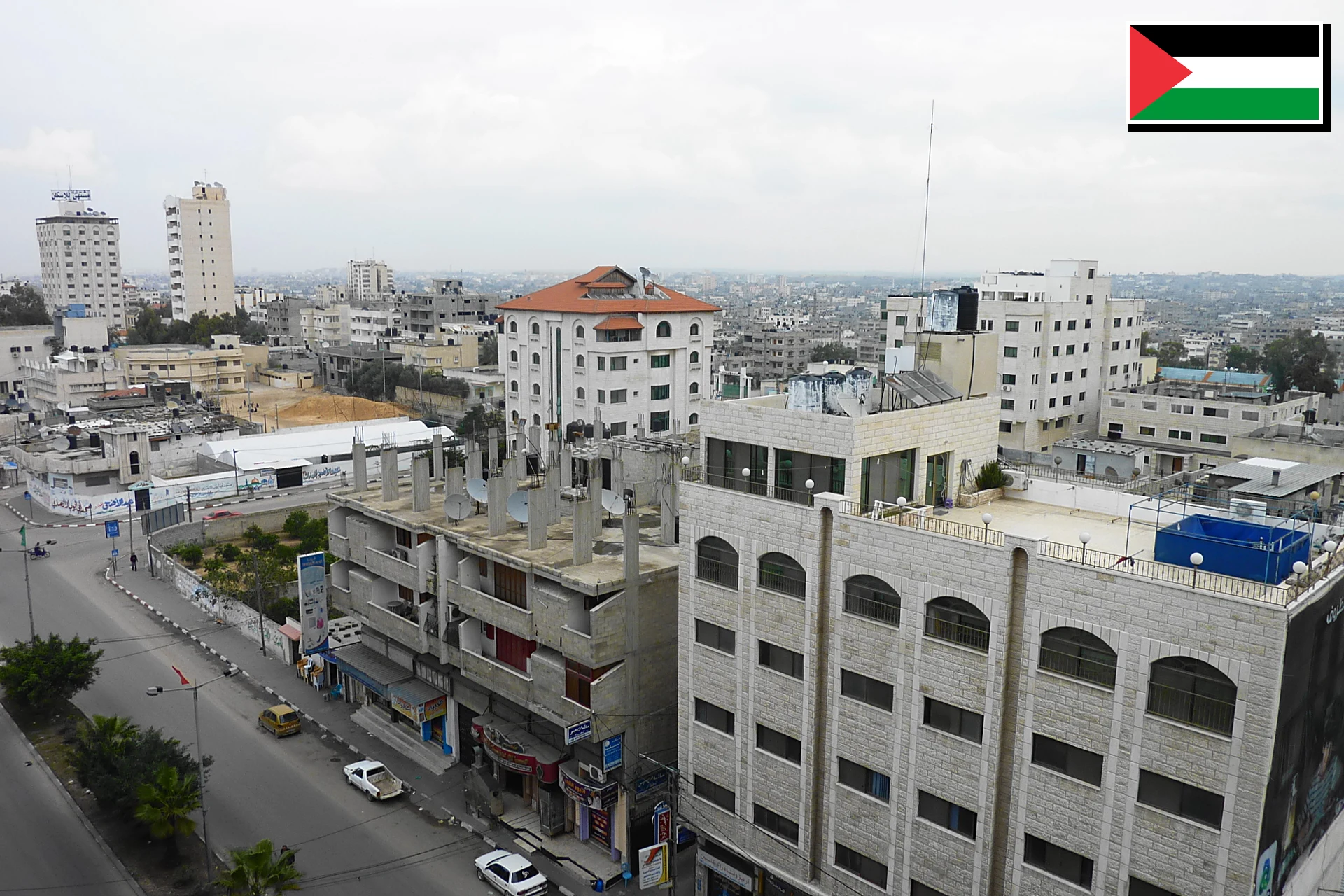
Photo: a street in Gaza City. (Mujaddara / Wikimedia Commons, CC BY-SA 3.0; photographed in 2011.)
Read also: Israeli Tanks Cross Gaza's Yellow Line in First Ground Operation Since Ceasefire Began, Israel Kills Hamas Rafah Brigade Commander Samir Abu Younis in Gaza Strike, the Third to Die in 18 Months and Israel's President Tasks Gadi Eisenkot With Forming Government in Major Setback for Netanyahu.
UPDATE — 25 November, 04:28 Bogotá time (09:28 UTC): Israel's military has now commented on the Shati strike, telling AFP it “targeted a Hamas terrorist,” without naming Abu al-Ouf; it confirmed he was a member of the internal security services, Naharnet reported. The strike also wounded others — Gaza's civil defense spokesman Mahmoud Bassal told AFP 12 people were wounded, while health officials put the number at six. Later in the morning, a separate Israeli airstrike hit Gaza City's northern Karama neighbourhood, killing one person, medics said, according to Reuters; the local outlet Akhbar Palestine identified the victim as Osama Jouda, killed by a drone strike as civilians were pitching a tent near the Egyptian camp, with several others injured. The IDF has still not confirmed Abu al-Ouf by name, and the exact time of the Shati strike remains unconfirmed beyond “early Wednesday” and “at dawn.” Al Arabiya / Akhbar Palestine
UPDATE — 25 November, 05:27 Bogotá time (10:27 UTC): IDF sources confirmed to The Jerusalem Post on Wednesday morning that Muhammad Majed Abu al-Ouf was killed in the Shati strike, alongside his wife and two daughters; the IDF spokesperson's office had not yet issued a more formal public confirmation. The strike hit at around 3 a.m. Wednesday, according to Ynet, and the two daughters were aged 13 and 15, the South China Morning Post reported; Abu al-Ouf was 47. The confirmation by name resolves what the earlier update noted — that the military had commented on the strike without naming him.
UPDATE — 25 November, 06:26 Bogotá time (11:26 UTC): In a separate incident in southern Gaza, a girl was moderately wounded when Israeli forces fired toward tents housing displaced Palestinians in the Hamad residential area, north of Khan Younis, a medical source at Nasser Hospital said, WAFA reported; local sources told Anadolu the girl was wounded by gunfire outside areas under Israeli control, according to Daily Sabah. There was no immediate Israeli comment on that incident.
UPDATE — 25 November, 08:35 Bogotá time (13:35 UTC): Separately on Tuesday, medics said three people were killed in an Israeli airstrike at a police post in Al-Mawasi, west of Khan Younis, in southern Gaza. The Hamas-run interior ministry said two of those killed were police officers, and five other people were wounded, The Print reported, citing medics and police. Another Israeli airstrike near the Netzarim corridor, further north, killed three more people, according to Deccan Herald, which cited medics.
UPDATE — 25 November, 10:29 Bogotá time (15:29 UTC): The IDF and the Shin Bet have now issued a formal confirmation of Abu al-Ouf's killing: a joint statement around 2:00 p.m. Wednesday confirmed him by name, The Jerusalem Post reported, saying he "served as a key source of expertise in efforts to restrict the IDF's counterterrorism operations" and accusing the internal security apparatus of executing opponents of Hamas and running torture facilities. The Gaza Interior Ministry's formal statement gives the family's ages as 47 for Muhammad Majid Abu al-Awf, 41 for his wife Noura Ezzat Abu al-Awf, and 15 and 13 for daughters Yusra and Jana, Al Jazeera reported — matching the 47 cited in the earlier update and reconciling the 48 given in the main text from al-Shifa Hospital sources. Haaretz, citing a Shifa Hospital source via Al Jazeera, reported that five people were killed in the Shati strike; the ministry and hospital sources cited by other outlets name four members of the same family, and the identity of any fifth victim has not been confirmed. Al Jazeera reported at least seven Palestinians were killed in Israeli attacks across Gaza on Wednesday.
UPDATE — 25 November, 12:30 Bogotá time (17:30 UTC): Gaza's Government Media Office said on Tuesday it had documented 6,405 Israeli violations of the cease-fire since it took effect on 10 October 2025, with 1,690 Palestinians killed, 6,120 wounded and 223 detained in those incidents, TRT World and Daily Sabah reported. The figures are the Hamas-run office's own tally and have not been independently verified.
UPDATE — 25 November, 14:31 Bogotá time (19:31 UTC): A man was killed when an Israeli attack hit a tent sheltering displaced people in Jabalia al-Balad in northern Gaza, Al Jazeera reported, and the Palestinian outlet Palinfo reported a citizen killed in a strike on a tent at the Halawa camp in Jabalia. Separately, two people were killed Wednesday in a strike on a tent sheltering displaced people in the al-Tawaam area, northwest of Gaza City, Quds News Network reported, according to Haaretz. Palinfo reported one person killed and several wounded in a drone strike on the Egyptian displacement camp in the at-Tawam area.
UPDATE — 25 November, 15:33 Bogotá time (20:33 UTC): The two people killed in the strike on a tent sheltering displaced people in the al-Tawaam area have been identified as Osama Joudeh, who was killed in the strike, and Mohammed Ali Joudeh, who succumbed to his wounds a few hours later, Quds News Network reported, according to Haaretz.
UPDATE — 25 November, 16:30 Bogotá time (21:30 UTC): More than 1,650 Palestinians have been killed since the ceasefire began in October 2025, according to an AFP tally based on data from Gaza's health ministry, Dawn reported; in the same period, seven Israeli soldiers and one civilian contractor have been killed, according to the same tally. Shifa Hospital said a person wounded in a strike on the Jabalya refugee camp on Monday died on Tuesday morning, Haaretz reported.
UPDATE — 25 November, 22:28 Bogotá time (03:28 UTC): The strike on the Shati refugee camp apartment injured 12 people as well as killing Mohammed Abu al-Ouf, his wife and their two daughters; Al-Shifa Hospital in Gaza City confirmed it had received the four bodies, and Gaza’s Ministry of Home Affairs confirmed the four deaths, Haaretz and Lianhe Zaobao reported. Gaza’s civil defence agency said at least six more people were killed in strikes across the Strip on Wednesday, including two brothers killed in a strike on a vehicle in Gaza City, Zaobao reported.
UPDATE — 25 November, 23:26 Bogotá time (04:26 UTC): By late Wednesday, the day’s death toll in Gaza stood at at least 10, Lianhe Zaobao reported, counting the four members of the Abu al-Ouf family killed in Shati and at least six others killed in strikes across the Strip. Al Jazeera, citing hospital sources, reported 11 people killed since dawn in Gaza City and northern Gaza, including two girls, while Al Mayadeen reported 10 killed since Wednesday morning, including two children and a woman.
UPDATE — 26 November, 05:32 Bogotá time (10:32 UTC): Israeli strikes and gunfire killed at least nine Palestinians overnight into Thursday, medics said, in a third consecutive night of attacks despite the year-old ceasefire, Reuters reported. Three overnight strikes killed eight people, hospital officials said: a strike on an apartment in Deir al-Balah killed Khaled Abu Nada, the Hamas-appointed deputy education minister, and his wife, and two strikes in Gaza City killed three people each in the Tuffah neighbourhood and the Beach refugee camp, the Associated Press reported. A 62-year-old man was later shot dead in the Bureij refugee camp, medics said. Prime Minister Benjamin Netanyahu and Defence Minister Israel Katz said in a joint statement that the military had killed Abu Nada, who oversaw economic and education affairs for Hamas in Gaza. At least 1,600 Palestinians and five Israeli soldiers have been killed since the ceasefire was agreed in October 2025, according to Palestinian and Israeli tallies, Reuters reported.
UPDATE — 26 November, 06:26 Bogotá time (11:26 UTC): Prime Minister Benjamin Netanyahu said the strike on Abu Nada was one of a series of targeted killings of senior Hamas members and officials, adding that Israel has killed about 80 Hamas militants in the past month, Reuters reported. Hamas confirmed Abu Nada's death and that he was a member of its political office, saying the continued policy of "assassination" violates the Gaza ceasefire agreement and international law, and holding US President Donald Trump's Board of Peace politically and morally responsible for failing to stop the attacks. The Israeli army said Abu Nada was responsible for managing Hamas's economic affairs and overseeing its banking and investment network, directing funds toward military activities, Arab News reported. Israeli troops now control around two-thirds of Gaza, up from more than half at the time of the ceasefire, with Hamas controlling a sliver of territory along the coast, Reuters reported.
UPDATE — 26 November, 12:27 Bogotá time (17:27 UTC): The main power generator at al-Rantisi Children's Hospital in Gaza City stopped working on Wednesday, disrupting vital medical services, Gaza's Health Ministry said, TRT World reported. Engineering teams are working to restart the generator under "extremely difficult" conditions and with very limited resources, the ministry said, and the lack of oil and spare parts needed for repairs is making the work difficult. The ministry did not specify what caused the breakdown, which services had been affected, or when the generator or the suspended services would be restored, Daily Sabah reported. TRT World reported that the breakdown comes amid Israeli restrictions on the entry of fuel, generator lubricants and spare parts into Gaza.
UPDATE — 26 November, 13:28 Bogotá time (18:28 UTC): Hamas chief Khalil Al-Hayya said on Thursday that the group was "not prepared to withstand continued Israeli attacks" and would discuss with other Palestinian factions how to respond to "Israeli violations and the policy of daily killing", Arab News reported — a rare public signal that Hamas is weighing retaliation after three consecutive nights of strikes. "The equation of killing and blockade cannot be accepted under the (ceasefire) agreement," Hayya said, according to Al Jazeera. Gaza Health Ministry spokesperson Zaher al-Wahidi told Al Jazeera that more than 1,600 Palestinians have been killed since the ceasefire took effect last October, including 130 this month, and more than 6,000 have been wounded. Al Jazeera counts at least 10 people killed in Thursday's attacks — one more than the nine in the Reuters overnight tally — with the additional deaths reported in strikes in northern Gaza, including a drone attack in the Shati refugee camp and strikes in the Tuffah and Nassr neighbourhoods. In Deir el-Balah, Israeli Apache helicopters fired two missiles in succession at the apartment where Khaled Abu Nada and his wife were killed, during dawn prayers in an area crowded with tents sheltering displaced families, Al Jazeera's correspondent reported; six other people were wounded there, several critically.
UPDATE — 26 November, 14:27 Bogotá time (19:27 UTC): The Gaza Health Ministry says 74,746 Palestinians have been killed and 176,234 wounded since Israel launched its war in Gaza in October 2023, Al Jazeera reported, a figure also carried by the Associated Press. The ministry's count includes 1,679 people killed and more than 6,000 wounded since the ceasefire took effect last October. The Associated Press counted 10 people killed in Thursday's attacks — four strikes and a shooting — matching Al Jazeera's tally of 10 against the nine in the Reuters overnight count, according to the AP. The ministry, which is part of the Hamas-led government, maintains casualty records that are seen as generally reliable but does not offer a breakdown of civilians and militants.