
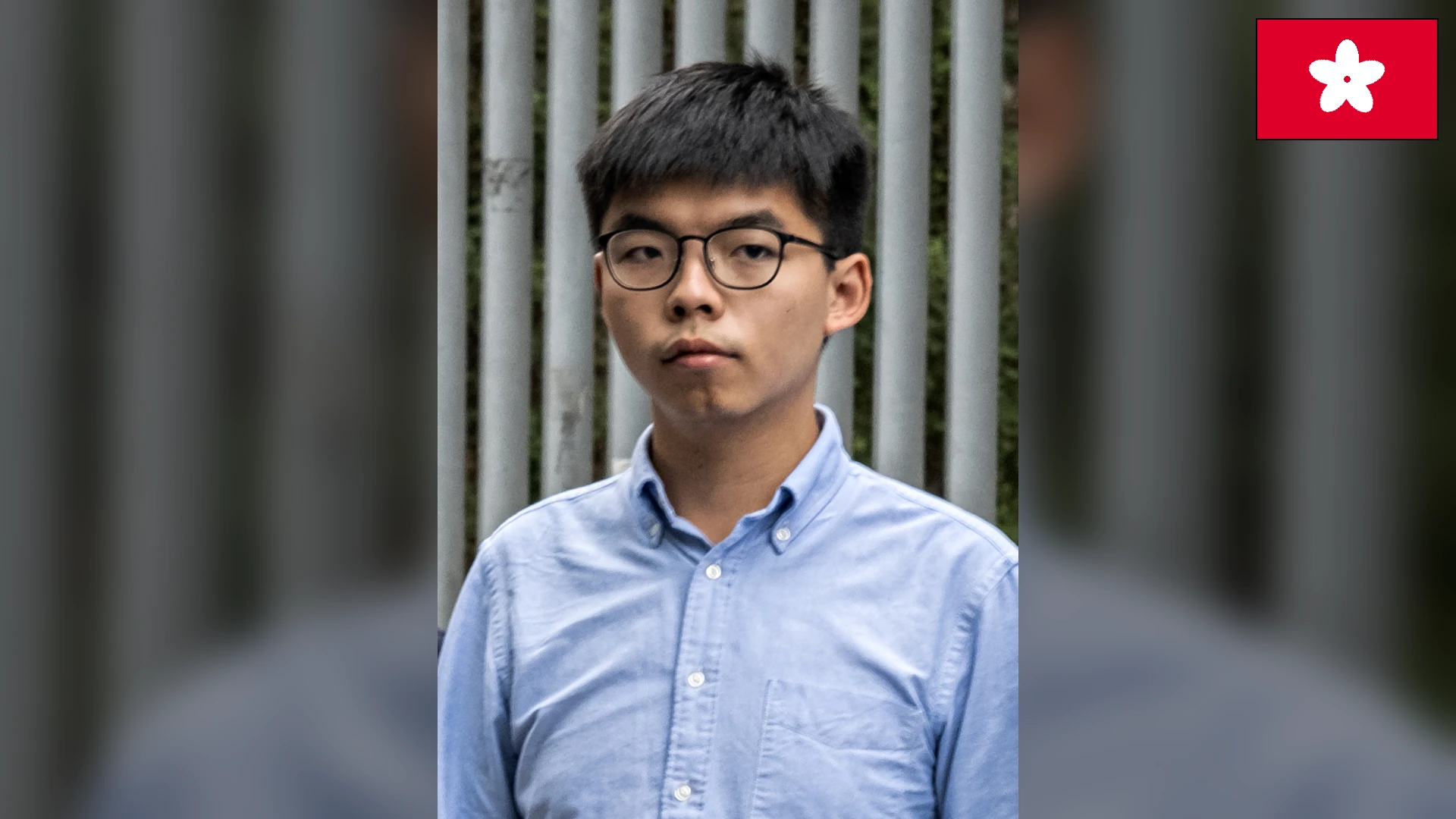
HONG KONG.- Hong Kong democracy activist Joshua Wong Chi-fung was sentenced on Thursday, November 5, 2026, to 10 years in prison for conspiring to collude with foreign forces, a second national security conviction that will keep the 30-year-old behind bars until November 2036, according to the South China Morning Post and CNN.
Wong, once the teenage face of Hong Kong's pro-democracy movement, pleaded guilty in early September to conspiring with former legislator Nathan Law — now living in self-exile overseas — and others to urge foreign governments to impose sanctions, blockades or other hostile measures against Hong Kong and China. Prosecutors said the conspiracy ran from July 1 to November 23, 2020, the year Beijing imposed the city's National Security Law, and continued after the law came into force through social media campaigns and meetings with US politicians, including former House Speaker Nancy Pelosi and then-Senator Marco Rubio, now the US secretary of state.
A "grave" offence, a 13-year starting point
High Court judge William Tam Yiu-ho ruled that Wong's offence was of a "grave nature," a finding that under the National Security Law carries a sentence of 10 years to life for foreign collusion, rather than the three-to-10-year range for lesser cases. The judge set a starting point of 13 years and cut three years for Wong's guilty plea, Nikkei Asia reported. The usual one-third discount for an early guilty plea was not available to Wong because of the law's minimum-sentence requirement, the South China Morning Post reported.
"Whilst it is a very heavy sentence on the defendant, the punishment must fit the gravity of the crime committed," Tam said, according to CNN, adding that it was "also necessary for this court to express the community's abhorrence" at Wong's actions.
The judge found that Wong and Law had partly contributed to the imposition of sanctions and adverse measures against mainland and Hong Kong officials, which significantly undermined national security, the Post reported. The United States sanctioned more than a dozen Hong Kong and Chinese officials after 2020.
Due out in January — now free in 2036
Wong is already serving four years and eight months for conspiracy to commit subversion, after pleading guilty in the landmark "47 case" trial in 2024, and had been due for release on January 7, 2027. The court ordered two months and two days of that sentence — the time remaining on it — to run concurrently with the new term, pushing his expected release date to November 2036, when he will be 40, Human Rights Watch said. He has been in custody since November 2020, when he was 23.
In his mitigation letter, seen by CNN, Wong wrote that his activism "was never driven by hatred." He told the court he has spent his time in prison studying the law and keeping up with technological advances, including artificial intelligence, and that "none of my aspirations for the future is more important than my solemn wish to care for my ageing parents once I complete my sentence."
Two versions of the case
Hong Kong Chief Executive John Lee, a former top security official, backed the sentence after it was announced, saying Wong and Law committed "extremely serious offences, which not only severely undermined national sovereignty, security, and development interests, but also directly prejudiced the well-being of the general public and the stability of society." A Hong Kong government spokesperson had earlier dismissed international criticism, saying: "The lawful exercise of free speech must not be conflated with taking actions to collude with a foreign country to impose 'sanctions' to harm one's own country."
Human Rights Watch called the charges "baseless" and said Wong "faces imprisonment until late 2036, when he will be 40." Amnesty International's Deputy Regional Director Sarah Brooks said the sentence was "a grim reminder of the city's disdain for human rights." The two organisations' position is that the prosecution criminalises peaceful advocacy; the Hong Kong and Chinese governments say the National Security Law has restored stability after the huge and often violent pro-democracy protests of 2019, and that the law targets only a small number of offenders.
More than 180 people have been convicted of national security offences in Hong Kong since 2020, according to the city's Security Bureau, cited by The Wall Street Journal.
The face of a movement
Ahead of the sentencing on Thursday morning, police heightened security outside the High Court near Hong Kong's financial district, where dozens of people had camped out — some for two nights — to catch a glimpse of one of the city's most famous prisoners. Wearing a navy shirt and his usual black-framed glasses, Wong nodded to supporters in the public gallery as he was led into court.
Wong rose to prominence in 2012 at the age of 15, leading sit-in protests that overturned a government plan to introduce Chinese civic education in the city's schools. Two years later he became one of the key leaders of the Umbrella Movement, which blocked major thoroughfares for 79 days to demand greater democracy. In 2016 he co-founded the pro-democracy party Demosisto, which sent Law to the Legislative Council as its youngest member; the party disbanded hours after Beijing passed the National Security Law on June 30, 2020, and Law left Hong Kong days later. Law is now one of dozens of democracy activists overseas wanted by Hong Kong's national security police, with a cash bounty on his head.
In the "47 case," 45 opposition figures were jailed for taking part in unofficial primaries in 2020 to screen candidates for Legislative Council elections. Most pleaded guilty; 14 were convicted after the 2024 trial, the largest single prosecution of pro-democracy activists under the law, and two were acquitted. Since the law came into effect, civil groups have disbanded, some independent media outlets have shut down, the legislature now comprises only pro-Beijing loyalists, and most pro-democracy figures are either in jail or in exile.
What is still to be confirmed
Wong's legal team has not yet said whether he will appeal the sentence. No appeal had been announced by Thursday afternoon Hong Kong time. The long-term picture also remains open: with the new term running to November 2036, Wong will have spent more than half his life — from the age of 23 to 40 — in custody if the sentence stands. This article will be updated if an appeal is filed or if the Hong Kong government or Wong's lawyers make further statements.
Read more on The Wire Post: China Lodges Formal Protest Against the UK Over "Arbitrary and Excessive" Border Checks on Its Citizens, Pete Hegseth Declares China's Confucius Institutes a National Security Threat and Says Pentagon Dismantled 80 "Propaganda Cells" on US Campuses and Marco Rubio Says Donald Trump Has Not Decided on Iran Strikes as Iranian Envoys Hold Doha Talks Days Before the Midterms.
Sources: CNN, November 5, 2026; South China Morning Post, November 5, 2026; Nikkei Asia, November 5, 2026; Human Rights Watch, November 5, 2026; Amnesty International, November 5, 2026; The Wall Street Journal, November 5, 2026; Korea Times, November 5, 2026. Cover photo: Joshua Wong in 2019 (Studio Incendo, CC BY 2.0, via Wikimedia Commons), with a small Hong Kong flag added in the top-right corner.