
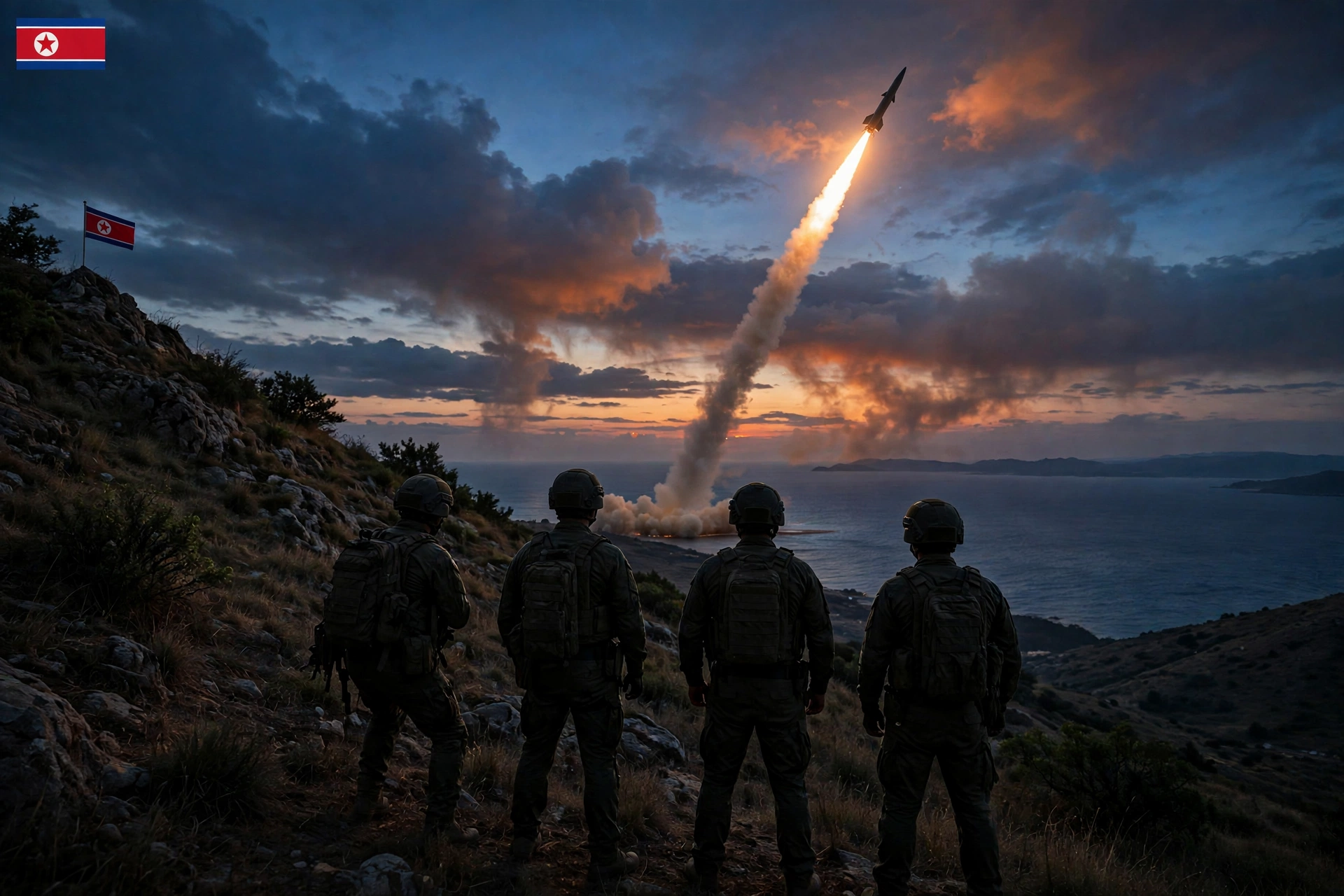
SEOUL.- North Korea said on Sunday, November 1, 2026, that it tested a cluster-bomb warhead that can be mounted on tactical ballistic missiles, a weapon that spreads dozens to hundreds of smaller explosives over a wide area and that Pyongyang now vows to put into operational service before the end of the year.
The test was carried out on Saturday, October 31, by the North's Missile Administration to assess the combat adaptability and power of the warhead, according to the Korean Central News Agency (KCNA), as reported by South Korea's Yonhap news agency.
What Pyongyang claims
Research institutes under the Missile Administration said the "Standard Type 2" cluster-bomb warhead is capable of devastating a target area of 12 to 13 hectares at its highest density. KCNA used stronger language, saying the warhead could turn such an area "into ashes" — an area roughly equal to about 18 soccer fields. Those figures are North Korea's own claims; they have not been independently verified, and no outside assessment of the damage area was offered on Sunday.
The head of the Missile Administration said cluster warheads are classified into four categories by purpose, including special-purpose and standard types, and that all of them will be made available to military units to select and use according to the target before the end of 2026.
The test was overseen by General Kim Jong-sik, a member of the Central Military Commission of the ruling Workers' Party of Korea. North Korean leader Kim Jong Un was not reported to be present at Saturday's test.
What Seoul detected
South Korea's military said it had monitored the launch. According to the South Korean account reported by Yonhap, a missile was fired toward the Yellow Sea, known in Korea as the West Sea, from around Chongju county in the northwest of North Korea. The Joint Chiefs of Staff said South Korea and the United States had been tracking related movements before the launch and maintained a readiness posture, though Seoul did not announce the launch on Saturday itself.
Shin Jong-woo, secretary-general of the Seoul-based Korea Defense and Security Forum, said the missile appeared to be from the Hwasong-11 family, a line of short-range ballistic missiles North Korea has tested repeatedly in recent years. Other analysts cited in South Korean media pointed to the Hwasong-11B, also known as the KN-24, with a range of about 400 kilometers.
Not the first cluster test
In April 2026, North Korea said it tested cluster bombs mounted on the Hwasong-11 Ra tactical ballistic missile, a launch overseen by Kim Jong Un and his daughter Ju-ae, striking an island target about 136 kilometers away. Saturday's test is the second public demonstration of the capability this year — and the first in which Pyongyang explicitly ties the warhead to a year-end deployment deadline for four variants.
Cluster munitions are widely feared because a single warhead disperses many submunitions in the air, striking multiple targets at once across a broad zone. Their use has drawn international condemnation for the risk they pose to civilians, including from unexploded submunitions left behind after a strike.
Sources: Korea Times (Yonhap), November 1, 2026; Zark News, November 1, 2026; Seoul Economic Daily, November 1, 2026.