
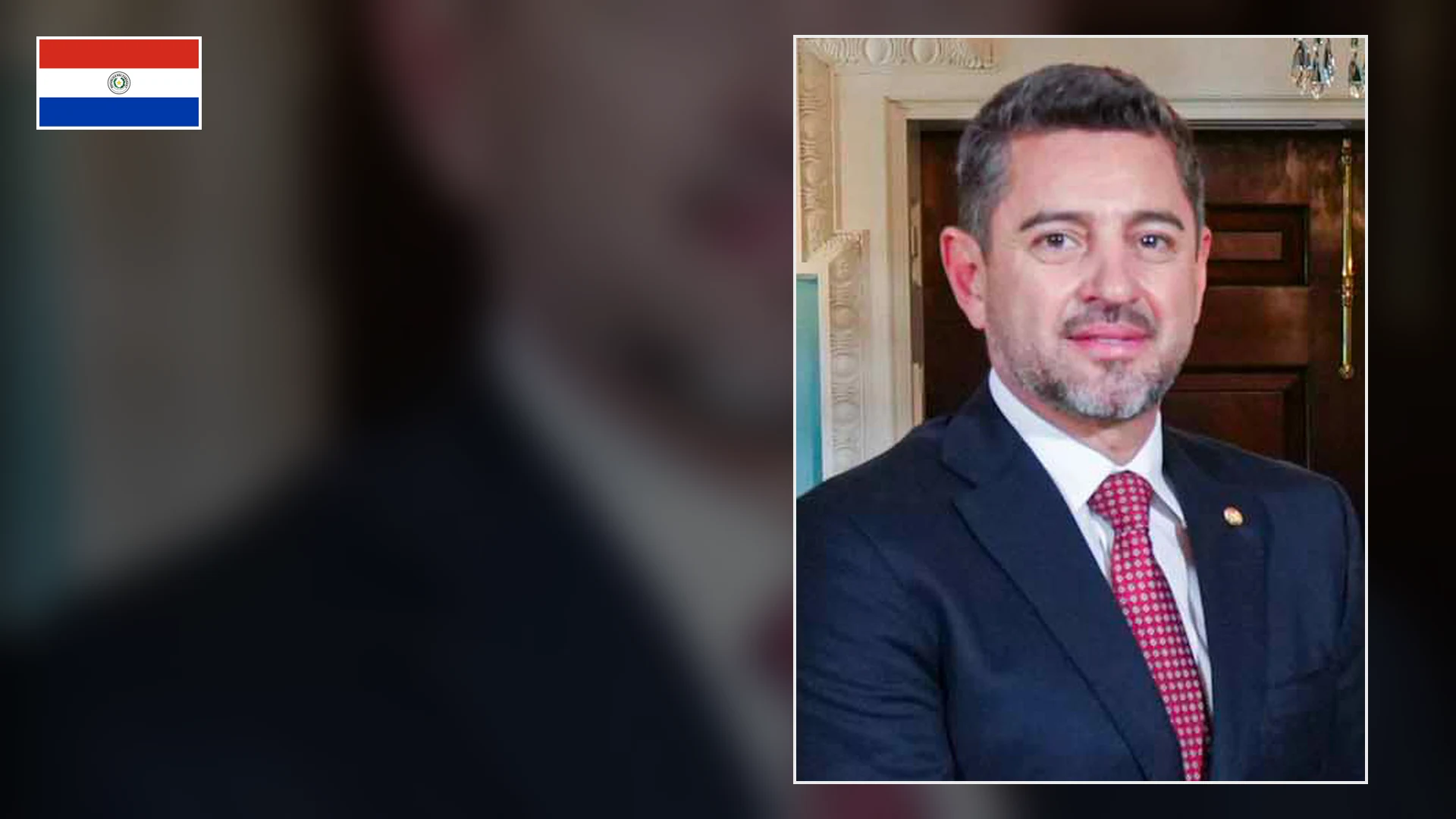
ASUNCIÓN.- Paraguay's Senate voted on Friday, November 6, 2026, to remove President Santiago Peña from office over the collapse of Ueno Bank, and within hours prosecutors ordered the 47-year-old former president placed under house arrest. Vice President Pedro Alliana, 52, was sworn in soon after as the country's 53rd president and will serve out the term until August 2028, Al Jazeera reported.
The vote was 44 in favor of removal, with one senator abstaining in the 45-member chamber — well above the 30 votes needed to convict. It ended, in less than a week, the presidency of a man who took office in August 2023 and made Paraguay's banking crisis the most serious political upheaval the country has seen in more than a decade.
From resignation offer to removal in 48 hours
The fall was dizzyingly fast. On Tuesday, November 3, Paraguay's central bank seized Ueno Bank after finding its solvency ratio had fallen below 50% of the required minimum, CNN reported. The digital lender had about 2.9 million customers in a country of 6.1 million people — nearly two-thirds of Paraguay's adults, according to Al Jazeera — and its accounts and pension payments were frozen overnight, sending savers into long lines at banks and into street protests.
On Thursday, Peña offered his resignation, saying he was stepping down "with the stability of our country, social peace, and the need to preserve our public institutions in mind," and to give peace of mind to Paraguayans "who entrusted their savings to our financial system." Congress refused to let him go that way. The Chamber of Deputies voted 78 to zero to impeach him, and the Senate opened its trial that night at 7:50 p.m., sitting as a court with its president, Basilio "Bachi" Núñez, presiding. Read more: Santiago Peña's Impeachment Trial Opens in Paraguay's Senate as Prosecutors Present Charges.
On Friday, Peña asked the Senate for a 72-hour extension to prepare his defense, arguing that the time allotted was "clearly insufficient" to exercise his constitutional right to a defense. Lawmakers rejected the request and pressed ahead. Peña did not appear in person; his lawyers, Adolfo Ferreiro and Ricardo Preda, represented him before the Senate.
The reason Congress chose impeachment over resignation was spelled out by Al Jazeera: had Peña been allowed to resign, he would have kept the right of former presidents to a Senate seat, with legal protections from prosecution. The lower chamber had accused him of "serious and systematic dereliction of duty" in his dealings with the bank. Even his own Colorado Party, which holds majorities in both houses and has dominated Paraguayan politics since 1948, backed his removal. "We support the impeachment of the president of the republic, Santiago Peña, in order to restore the republic's institutions," former president and party leader Horacio Cartes wrote in a statement.
House arrest, three criminal cases, and a warrant for the central bank chief
The removal stripped Peña of his parliamentary immunity, and the criminal investigation moved the same day. Attorney General Emiliano Rolón Fernández has opened three criminal cases against Peña and other former officials over the Ueno affair, covering alleged breach of trust, influence peddling, illicit enrichment, money laundering and administration for personal benefit. The most serious charges carry up to 10 years in prison.
Prosecutors ordered Peña to remain at one of his homes in Asunción until he appears before them on Saturday morning. He will stay under house arrest until a judge decides where he should remain while the criminal process runs, prosecutor Christian Benítez said, according to CNN. Prosecutors also issued an arrest warrant for Carlos Carvallo, the former head of Paraguay's central bank, who resigned earlier in the week. At least 27 people are facing criminal charges in the scandal, including lead Ueno shareholder Miguel Vazquez, with investigators examining attempted fraud, breach of trust, misappropriation of funds and influence peddling.
Peña said on Friday afternoon that he would cooperate with the investigation. "I take my leave with gratitude, while fully acknowledging the anguish of those who are currently awaiting answers," he wrote on social media. In a separate statement he added: "I do not wish for my presence to be a source of greater division or instability. It is my responsibility to place the country above my own personal fate."
Not everyone in Congress was satisfied with house arrest. Senator Yolanda Paredes told reporters earlier: "This guy, Santiago Peña, needs to be jailed. An arrest warrant must be issued … pretrial detention, straight to jail."
What Peña is accused of
The impeachment charges, brought by 35 opposition lawmakers and ruling-party dissidents, alleged that Peña had conflicts of interest, manipulated regulatory oversight, diverted pension funds and took part in an institutional cover-up involving the central bank, Reuters reported.
The links at the center of the case are documented: in 2023, Peña was identified as a shareholder of Ueno's parent company, though he says he sold his shares in early 2025. He later appointed Carvallo — who had previously headed the financial company that became Ueno — as central bank chief. Under his administration, public entities poured money into the bank, including the Social Security Institute (IPS), which manages the pensions of most of the country's workers. About $355 million in state pension funds was invested in Ueno, and the bank, Paraguay's fifth-largest by deposits, was fueled by some $800 million in public money.
The central bank said Ueno had violated limits on loans to related companies, and that its solvency ratio had collapsed "as a result of adjustments made to its financial statements during the regularization process." The bank said on Thursday night it would start processing guarantee payments to certain Ueno customers in stages, but millions remain locked out of their savings.
A new president, and a country waiting for its money
Alliana, who served as Peña's vice president since the start of the term in 2023, began his political career as governor of his home department, Ñeembucú, in Paraguay's south, and spent nearly a decade in the Chamber of Deputies, including three years as its president. He has pledged to fully compensate those affected by the collapse of the digital lender, Mathrubhumi reported.
Peña, 47, entered office as one of the youngest presidents in Paraguayan history at 44, after serving as finance minister from 2015 to 2017 under Cartes and as a director of the central bank. He was one of the staunchest allies of U.S. President Donald Trump's administration, aligning with Washington on immigration and security. A U.S. State Department spokesperson said after his announced resignation that the relationship between the two countries remains strong: "We remain committed to the enduring relationship between the American and Paraguayan people and look forward to continuing our close cooperation on shared priorities."
Peña is the second Paraguayan president removed by impeachment since the end of Gen. Alfredo Stroessner's 35-year dictatorship in 1989, after Fernando Lugo, who was ousted in 2012, the Economic Times noted.
What comes next: Peña's appearance before prosecutors on Saturday morning; a judge's decision on where he stays during the criminal process; the staged guarantee payments to Ueno's savers and whether Alliana's promise of full compensation holds; the election of a new vice president; and the criminal cases against Peña, Carvallo and the other people charged. The crisis began with the bank's collapse — see Paraguay President Santiago Peña Resigns After Ueno Bank Collapse Freezes Millions of Savers' Accounts and Santiago Peña's Resignation Freezes in Congress as Deputies Walk Out — Impeachment Trial Set for Tonight.
Sources: Al Jazeera, November 7, 2026; CNN, November 6, 2026; Reuters via Dunya News, November 7, 2026; The Economic Times, November 7, 2026; Geo News, November 7, 2026; Mathrubhumi, November 7, 2026. All times are local time in Asunción, Paraguay. Cover photo: Pedro Alliana in Washington, D.C., on August 4, 2026 — official U.S. State Department photo by Freddie Everett, public domain via Wikimedia Commons — cropped to 1920×1080 with a small flag of Paraguay added in the top-left corner.