
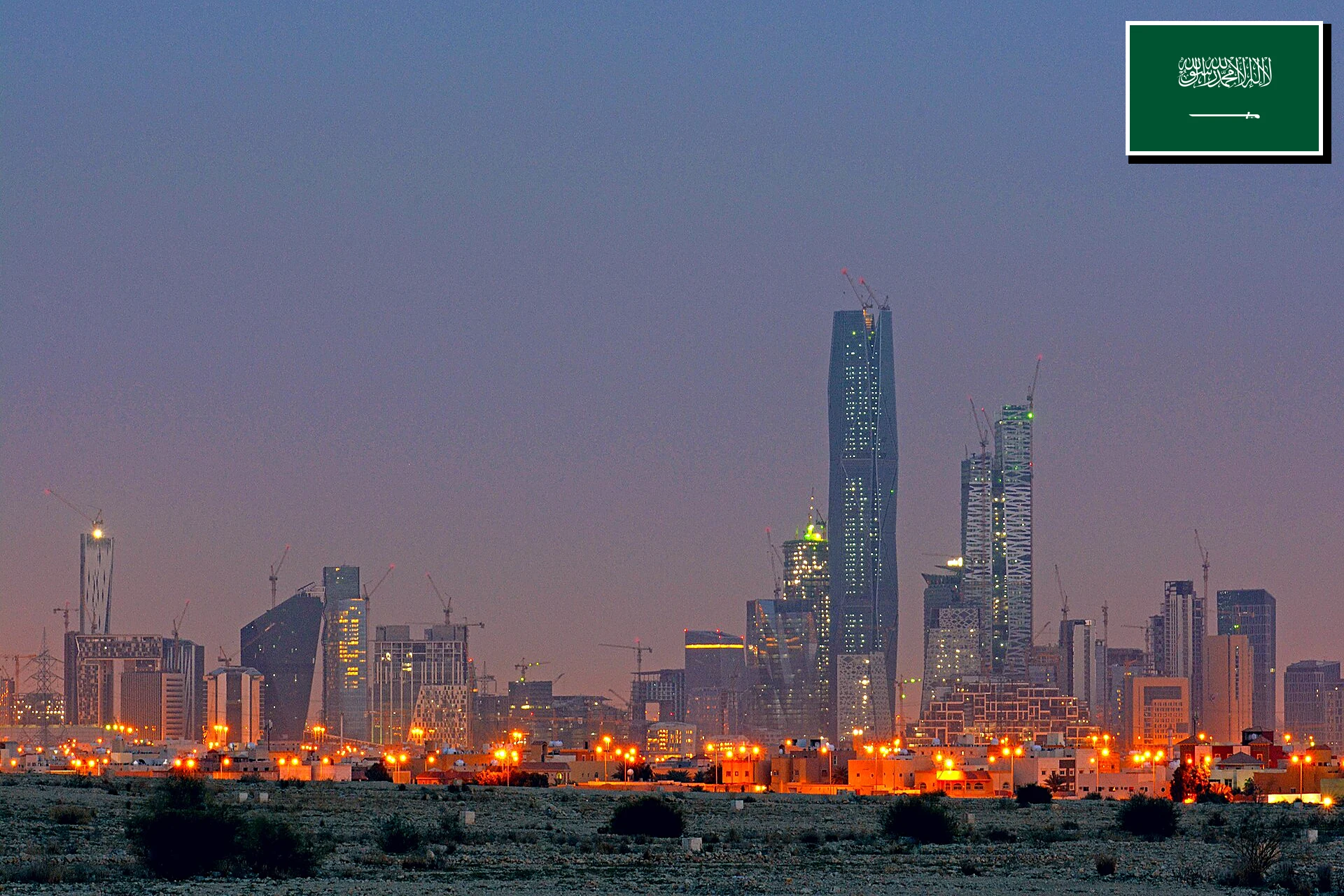
A strike hit the 80-storey Public Investment Fund (PIF) Tower in Riyadh's King Abdullah Financial District on Tuesday, wounding 11 people, Saudi authorities said — the second attack on the kingdom's tallest skyscraper in five days. Saudi Arabia blamed Yemen's Houthi militia for the strike, but the group, which claimed last week's attack on the same tower, has not claimed Tuesday's, Agence France-Presse reported.
Saudi Arabia's Civil Defense said the 11 injured were two Saudi citizens, two Indian nationals, three Nepalese nationals and four Egyptians, according to the Saudi Press Agency. The Indian Embassy in Riyadh confirmed that two Indian nationals were injured and said it was ascertaining further details and would extend all possible assistance to the injured and their families, Al Jazeera reported.
At least two of the 11 were in critical condition with severe burns, a source briefed on the attack told Agence France-Presse. Several of the injured were inside the tower repairing the damage from last week's strike when it was hit again, the source said.
The Saudi-led coalition said the attack was carried out with a drone and vowed a firm response. "The deliberate targeting of civilians and civilian objects by the [Houthis] will be met with a firm response," coalition spokesman Maj. Gen. Turki al-Malki said in a post on X, calling the attack a "cowardly terrorist attack". Reuters reported that the coalition later confirmed a drone was used.
Saudi authorities have not officially named the building that was hit. But three separate witnesses told AFP the strike targeted the PIF Tower, the 385-metre headquarters of the kingdom's sovereign wealth fund, and photos released by the Civil Defense appeared to show shattered glass and damage about halfway up the tower's facade.
No warning sent to phones
No emergency alert was sent to mobile phones before Tuesday's strike, witnesses said. A fourth witness told AFP a vehicle fitted with a speaker had warned pedestrians in the area to take cover. Police cars blocked some entrances to the financial district, and a waiter at a restaurant in the district said staff were evacuated: "We just reopened a while ago. They evacuated all of us telling us a tower has been hit. They closed the streets and they banned people from passing in streets or entering."
Last week's strike and a widening campaign
Last Thursday, an attack on the same tower damaged several floors and two adjacent buildings but caused no casualties, Saudi officials said. The Houthis claimed responsibility for that strike. The PIF Tower is a symbol of the fund driving Saudi Arabia's effort to diversify its oil-reliant economy — a project the war and the Houthi strikes have complicated.
The strikes on the financial district are part of a wider campaign. A tower belonging to state oil giant Aramco in the same district was hit earlier this month, and Riyadh's international airport was repeatedly struck in October, with one attack killing 14 people. A major attack on the airport forced the suspension of flights for two weeks, and the Future Investment Initiative conference, known as "Davos in the Desert", was postponed to 2027, the South China Morning Post reported. Al Jazeera reported that the attacks have also forced the postponement or cancellation of major events, including soccer's AFC Asian Cup.
Condemnation, and the war in Yemen
U.S. Secretary of State Marco Rubio spoke with Saudi Foreign Minister Prince Faisal bin Farhan Al Saud on Tuesday and condemned the "Iran-backed Houthi terrorist attacks on Saudi civilian and energy infrastructure," the State Department said. The two also discussed freedom of navigation in the Strait of Hormuz and the Bab al-Mandeb strait, and Washington issued a security alert urging Americans in the Middle East to exercise heightened vigilance.
India condemned the attack on Wednesday, saying two Indian nationals were among the injured and calling for an immediate halt to attacks on civilian and critical infrastructure in Saudi Arabia. The Gulf Cooperation Council's secretary-general, Jasem Mohamed AlBudaiwi, called it a "treacherous attack" and a "heinous crime", while Qatar, the United Arab Emirates, Kuwait, Lebanon and Pakistan also denounced the strike.
Britain, meanwhile, sanctioned the Houthis and four of the group's top officials, imposing asset freezes and travel bans for "deliberately attempting to undermine stability", as the conflict shows no sign of slowing.
In Yemen, the war continued on both sides of the front line. Local officials said a coalition airstrike on buses and trucks killed 26 people in Lahj province on Monday — 12 Houthi fighters and 14 civilians, according to two officials. The Houthis' military spokesman blamed the Saudi air force for the strike, while the Aden-based government said the Houthis had carried out the attack on civilian vehicles.
What is not yet confirmed
What remains unconfirmed: who carried out Tuesday's strike — the Houthis have neither claimed nor denied it, and the attribution rests on Saudi Arabia's account; the exact time of the strike, which Saudi authorities have not published; and the full extent of the damage to the tower, which Reuters said it could not immediately determine. The identities of the injured have not been released, and the coalition has not said when or how it will respond.
Photo: the King Abdullah Financial District in Riyadh at dusk. (B.alotaby / Wikimedia Commons, CC BY-SA 4.0)
Read also: Houthi Missiles Damage Aramco Tower in Riyadh's Financial District as Saudi Defences Intercept Attack and Houthis Fire Three Missiles at Riyadh After Saudi Coalition Strikes Hodeida Port.
UPDATE — 25 November, 07:28 Bogotá time (12:28 UTC): The Houthis said on Wednesday they had also attacked Saudi Arabia's Ras Tanura oil refinery, the kingdom's largest, near a major crude export terminal, and the financial district in Riyadh in three phases, The Straits Times reported. Houthi military spokesman Yahya Saree said the refinery attack caused fires and described the strikes as retaliation for Saudi airstrikes in Yemen. The Saudi-led coalition said earlier on Wednesday that air defences had intercepted and destroyed four drones in Ras Tanura, in the Eastern Province; it did not say the refinery itself had been struck. NASA satellite imagery reviewed by Reuters showed large swathes of thick black smoke around the refinery, covering an area of about 600 square kilometres. The Houthi claim of fires and damage at the refinery has not been independently confirmed by Riyadh, Xinhua reported.
UPDATE — 25 November, 08:35 Bogotá time (13:35 UTC): The Saudi-led coalition said it had struck Houthi operational capabilities at the port of Hodeidah, on Yemen's Red Sea coast, and targets in the northern governorates of Saada and Amran, and it instructed civilians in Hodeida to evacuate, Gulf News reported, citing the coalition and Houthi media. Houthi spokesman Yahya Saree threatened that the port of Jeddah and all other Saudi ports on the Red Sea coast would become targets if the coalition bombarded Hodeidah, and the group vowed 'blockade for blockade' and 'escalation for escalation' until Saudi airstrikes stopped, according to Xinhua.
UPDATE — 25 November, 22:28 Bogotá time (03:28 UTC): Brent crude traded at $93.60 a barrel on Wednesday, up $2.20 or 2.41%, after the Houthis said they had attacked the Ras Tanura refinery, Oilprice reported. The refinery processes 550,000 barrels per day, about 16% of Saudi Arabia’s refining capacity, according to The National, cited by Oilprice.