
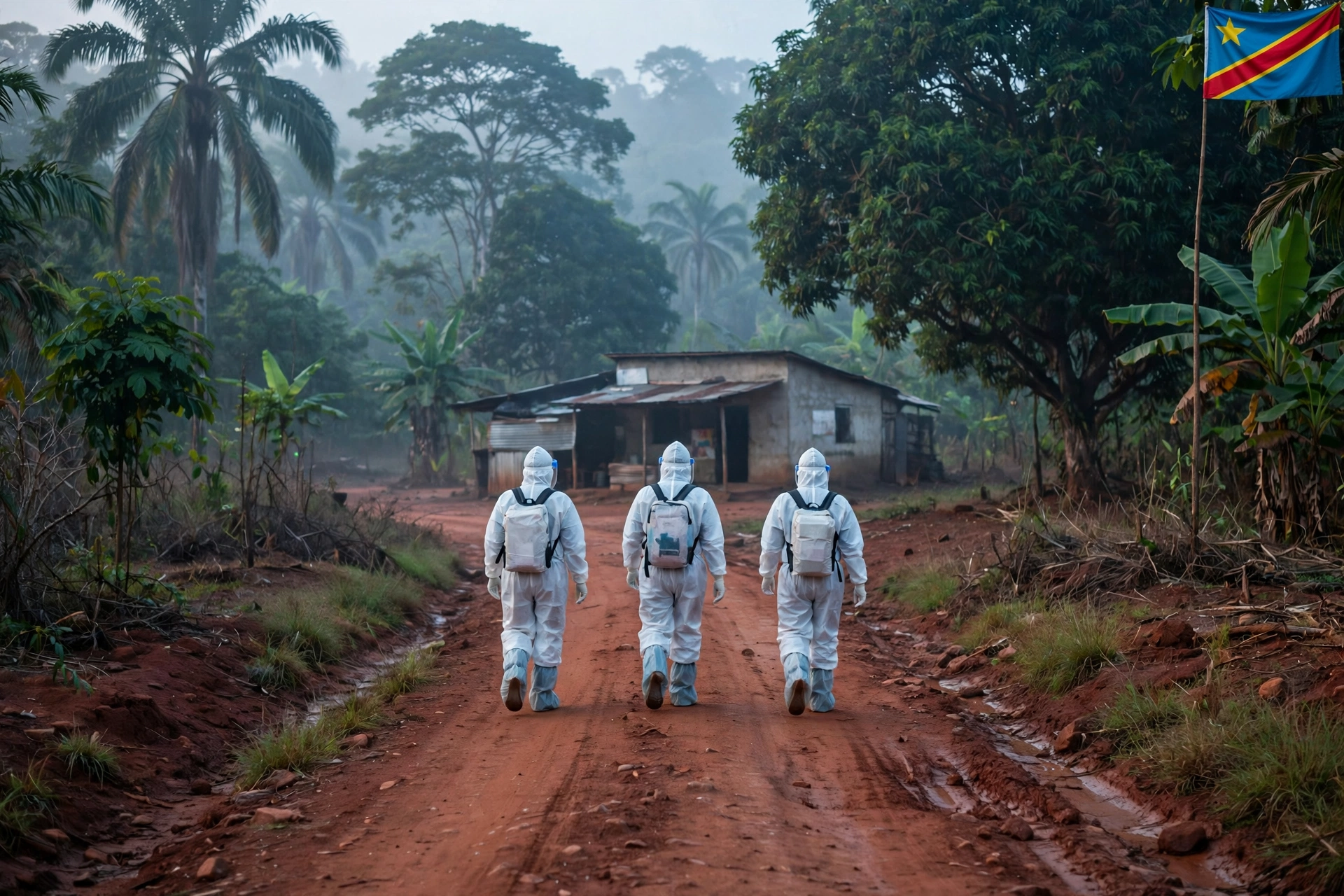
KINSHASA.- The death toll from Ebola in the Democratic Republic of the Congo (DRC) has surpassed 5,000, government data showed on Friday, with authorities yet to find a way to control the country's deadliest outbreak of the virus on record. More than 10,300 people have been infected since the outbreak was declared in May, with a case fatality rate of 48.6%.
The outbreak, caused by the rare Bundibugyo species of the virus, has spread to eight of the country's 26 provinces: Haut-Uele, Ituri, North Kivu, South Kivu, Bas-Uele, Tshopo, South Ubangi and North Ubangi. Many deaths have occurred outside treatment centres. There are no approved treatments or vaccines to combat the Bundibugyo strain, although research is ongoing and clinical trials of vaccines are under way.
The epicentre is a conflict zone
The health ministry said the epicentre of the epidemic remains in Ituri province, in the north-east of the country, a conflict zone that makes it harder to contain the virus. In September, an independent scientific review convened by the Africa Centres for Disease Control and Prevention (Africa CDC) reported progress in some areas, including declining cases and deaths in parts of Ituri. On Friday, Africa CDC called for stronger measures to protect frontline workers after two young Congolese doctors died from Ebola earlier in the week in North Kivu and Ituri.
This is the 17th Ebola outbreak in DR Congo's history, according to the United Nations, and it became the country's deadliest in August, passing the 2018-2020 epidemic, which recorded 2,299 deaths. It is also the world's second-largest ever, behind only the 2014-2016 epidemic that infected more than 28,600 people and killed more than 11,000 across Guinea, Liberia and Sierra Leone. The World Health Organization's Africa office said a continued scale-up of key control measures, greater access to affected areas and community outreach are needed to end the outbreak.
Fuentes: Al Jazeera, 31 de octubre de 2026; CGTN/Reuters, 31 de octubre de 2026; TRT World, 31 de octubre de 2026.